
What is Retail Forecasting?
What is Retail Forecasting?
Retail forecasting is the process of predicting future sales and customer demand in a retail environment to support inventory planning, merchandising decisions, and financial performance.
Retail Forecasting Explained
Retail forecasting is a specialized form of forecasting focused on predicting how much customers will buy, when they will buy it, and where demand will occur across stores, regions, and channels.
While general forecasting may focus on overall business performance, retail forecasting is more granular and operational. It often operates at:
- product level
- category level
- store or location level
- channel level (e-commerce vs physical stores)
Retail forecasting must account for a wide range of factors that influence demand, including:
- seasonality and trends
- promotions and pricing changes
- product lifecycle (new launches, end-of-life)
- customer behavior and preferences
- external factors such as weather or economic conditions
Because of this complexity, retail forecasting is both data-driven and collaborative. It combines statistical models with business input from merchandising, marketing, and operations teams.
Retail forecasting plays a critical role in connecting demand with execution. It informs:
- inventory planning
- assortment decisions
- pricing and promotions
- supply chain planning
- financial forecasts
Modern planning platforms such as Board enable retailers to integrate retail forecasting with financial and operational planning, ensuring that forecasts are aligned across the business and updated in real time.
Retail forecasting is especially important in environments with:
- seasonal peaks (e.g. holidays, fashion seasons)
- high product turnover
- omnichannel operations
- rapidly changing customer demand
In these contexts, accurate forecasting directly impacts both customer experience and financial performance.
Why Retail Forecasting Matters
Retail forecasting helps organizations:
- Anticipate customer demand and plan accordingly
- Improve product availability and reduce stockouts
- Optimize inventory levels and reduce excess stock
- Support better pricing and promotion decisions
- Align financial and operational plans
Without effective retail forecasting, retailers often face:
- missed sales due to stockouts
- excess inventory and markdowns
- inefficient promotions
- poor alignment between demand and supply
Retail forecasting is particularly critical because retail demand can change quickly due to trends, promotions, or external factors. Organizations that forecast accurately can respond faster and outperform competitors.
How Retail Forecasting Works
Analyze Historical Data
Retailers start by analyzing past sales data to identify:
- trends and seasonality
- product performance
- store and regional differences
This provides a baseline for forecasting.
Apply Forecasting Models
Retailers use a combination of methods, including:
- statistical models
- trend-based forecasting
- predictive analytics and AI
These models generate an initial demand forecast.
Incorporate Business Inputs
Forecasts are adjusted based on inputs such as:
- promotions and campaigns
- pricing changes
- product launches or discontinuations
- market conditions
This ensures forecasts reflect real business plans.
Forecast at Multiple Levels
Retail forecasts are typically created at different levels, including:
- SKU or product level
- category level
- store or region level
- channel level
This allows for more precise planning and execution.
Monitor and Update
Retail forecasts are updated frequently based on:
- actual sales performance
- changing demand patterns
- inventory levels
This ensures forecasts remain accurate and actionable.
Retail Forecasting vs Demand Planning
Retail Forecasting | Demand Planning |
Focuses on predicting retail sales | Focuses on aligning demand with operations |
Often more granular (SKU, store level) | Broader and more cross-functional |
Retail-specific | Applies across industries |
Retail forecasting is a key input into demand planning, especially in retail organizations.
Retail Forecasting vs Forecasting
Retail Forecasting | General Forecasting |
Retail-specific | Cross-industry |
Highly granular | Often higher-level |
Strong focus on products and stores | Often focused on financial metrics |
Retail forecasting applies general forecasting principles to the specific needs of retail businesses.
Examples in Practice
Fashion Retail Example
A fashion retailer forecasts demand for seasonal collections at SKU level, ensuring that the right styles and sizes are available in each store.
Grocery Retail Example
A grocery retailer forecasts demand for perishable goods, adjusting inventory levels to minimize waste while maintaining availability.
Omnichannel Example
A retailer forecasts demand across both online and physical channels, ensuring inventory is positioned to support customer purchases across touchpoints.
Promotion Planning Example
A retailer forecasts the impact of promotions on sales, allowing for better planning of inventory and marketing activity.
Key Benefits
- Improved forecast accuracy and planning reliability
- Better product availability and customer satisfaction
- Reduced excess inventory and markdowns
- More effective promotions and pricing decisions
- Stronger alignment between demand, supply, and finance
Related Terms
FAQs
See how Board transforms retail planning and forecasting
Turn consumer spending patterns into smarter merchandise, assortment, and replenishment plans – aligning product strategy to customers’ needs.
Explore Board's retail planning solutions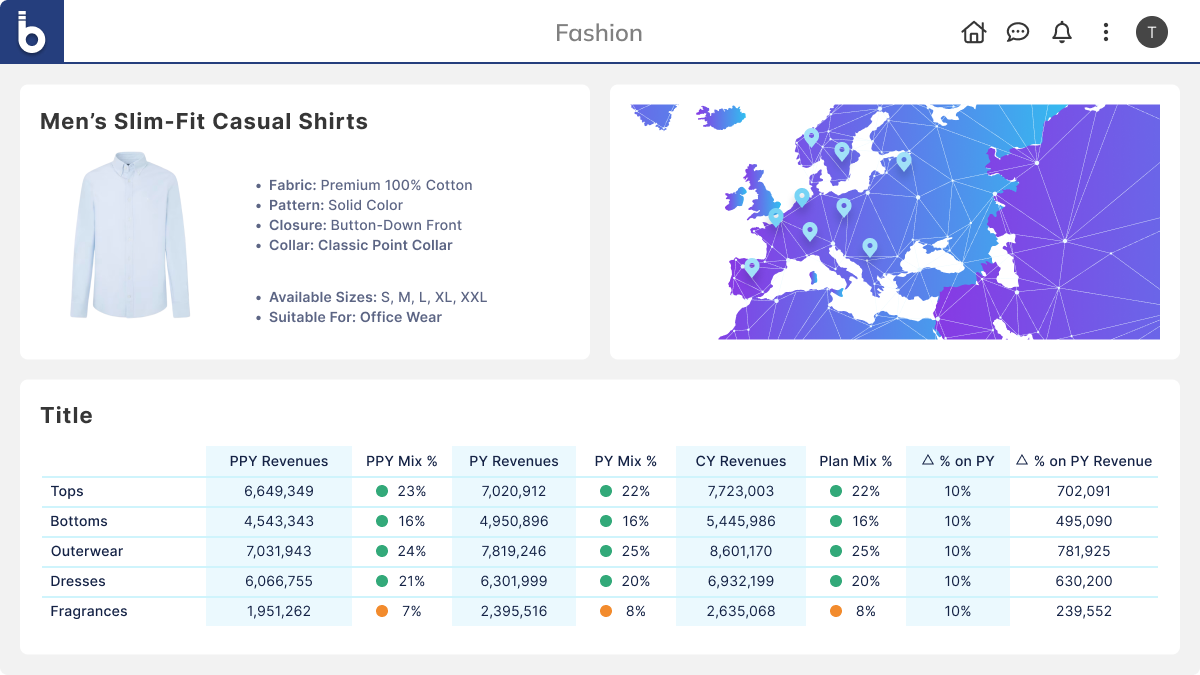

Let’s see what Board can do for you.
Get a tour of the Agentic Planning Platform in action.