
AI-native merchandise planning for continuous retail decision-making
Connect planning, OTB, inventory, and margin signals with AI so retail teams can make smarter merchandising decisions from plan to trade.
Merchandising teams are under pressure to move faster, protect margin, and respond to demand shifts before inventory decisions become markdown problems.
The Board Merchandiser Agent helps planners classify category performance, review plan accuracy, surface OTB exposure, understand root causes, and take action inside Board’s unified merchandising planning model.
Sorry, this video can’t be played right now. Please try again later.
What is the Board Merchandiser Agent?
The Board Merchandiser Agent is an AI-enabled planning capability that helps retail merchandising teams make faster, more complete decisions across Merchandise Financial Planning and Open-to-Buy.
It helps planners analyze category performance, understand last season’s plan accuracy, identify OTB and inventory risks, explain root causes, and recommend next actions.
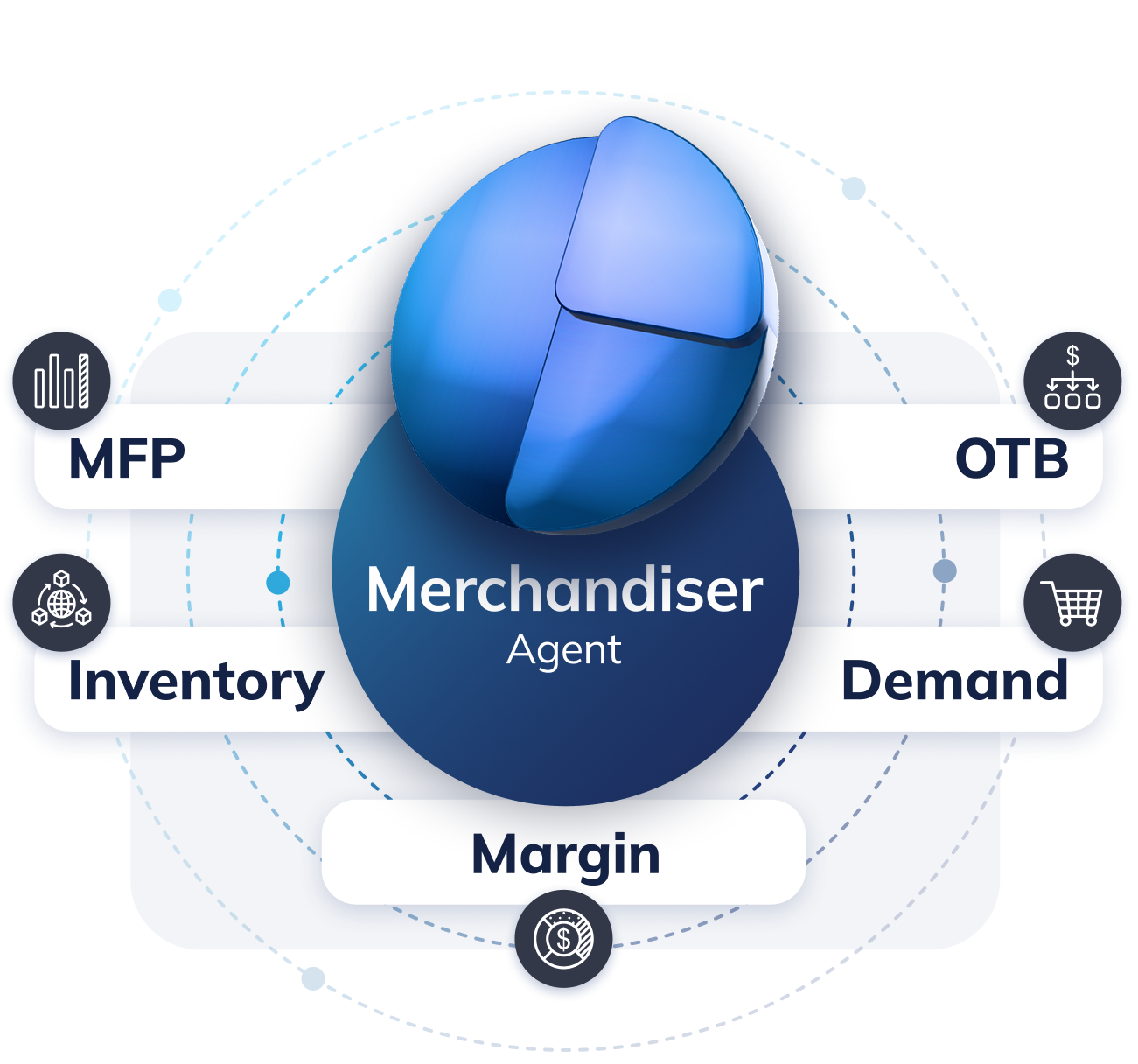
Unlike a standalone AI assistant, the Board Merchandiser Agent works inside Board’s connected merchandising planning environment, where MFP, OTB, inventory, margin, and commercial context are already aligned.

Merchandise Financial Planning

MFP Agent
MFP decisions shape the season before trading even starts. But category shifts, margin signals, and last year’s planning errors are often reviewed too late or too manually.
Helps planners:
- Classify categories as growth, core, or decline
- Review plan accuracy across sales, margin, markdown, and ASP/ACP
- Identify where forecast errors compounded or offset across the hierarchy
Business value:
Stronger category commitments, faster planning cycles, and fewer repeat planning errors.
Open-to-Buy

OTB Agent
OTB risk rarely appears as one clean issue. It builds through coverage gaps, sales deviation, utilization pressure, and inventory exposure across regions, channels, and products.
Helps teams:
- Review 13-week OTB performance against target coverage
- Prioritize the top planning lines requiring action
- Identify root cause across MFP error, OTB utilization, or both
- Flag frozen-period inventory risk and recommend intake reallocation
Business value:
Earlier visibility into OTB exposure, faster corrective action, reduced markdown risk, and better inventory effectiveness.
Allocation & Replenishment

Allocation & Replenishment Agent
Allocation and replenishment will extend the in-season decision loop by connecting OTB monitoring to physical stock movement across channels and stores.
Planned capabilities:
- Detect stock imbalance, size/colour risk, and service exposure
- Recommend inventory reallocation and store prioritization
- Support stock health and sell-through decisions across channels and stores
Future value:
Completes the in-season execution loop, helping retailers protect availability, improve sell-through, and reduce excess inventory.

Merchandising planning is moving faster. Planning cycles need to keep up.
Retail merchandising teams are managing more volatility across demand, inventory, pricing, and margin. But many planning processes still depend on disconnected spreadsheets, periodic reviews, and manual reconciliation between pre-season plans and in-season trading signals.
That creates a gap between what the business needs to know and when planners can act.
The Board Merchandiser Agent helps close that gap by supporting the decisions that matter most:
-
Which categories are growing, stable, or declining?
-
Where did last season’s plan miss?
-
Which OTB lines need attention now?
-
Is the issue caused by the plan, utilization, or both?
-
Where could inventory risk turn into margin pressure?
The result: AI that is not bolted on. AI that helps planning teams decide.
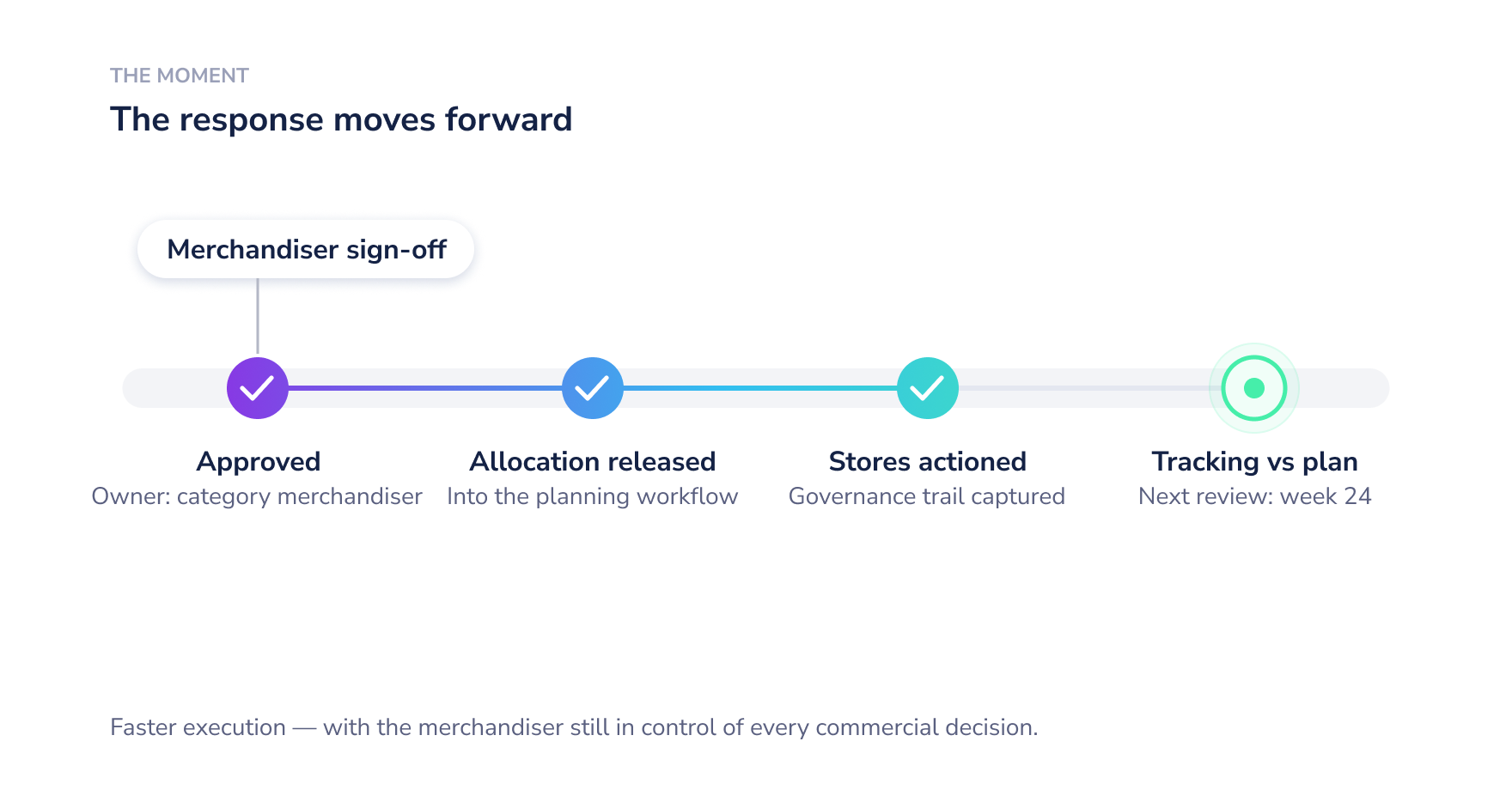
A day in the life of a decision-ready planner
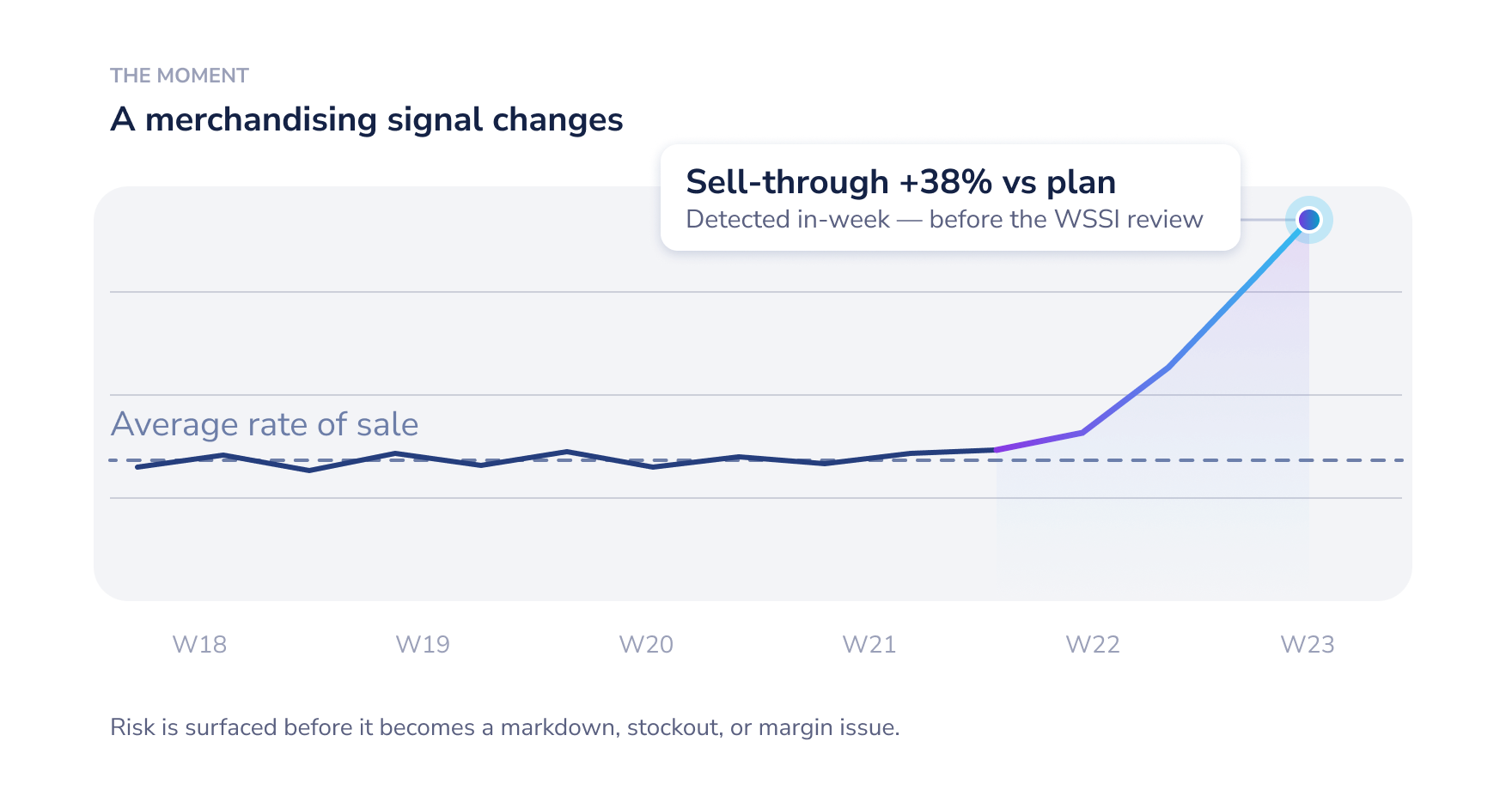
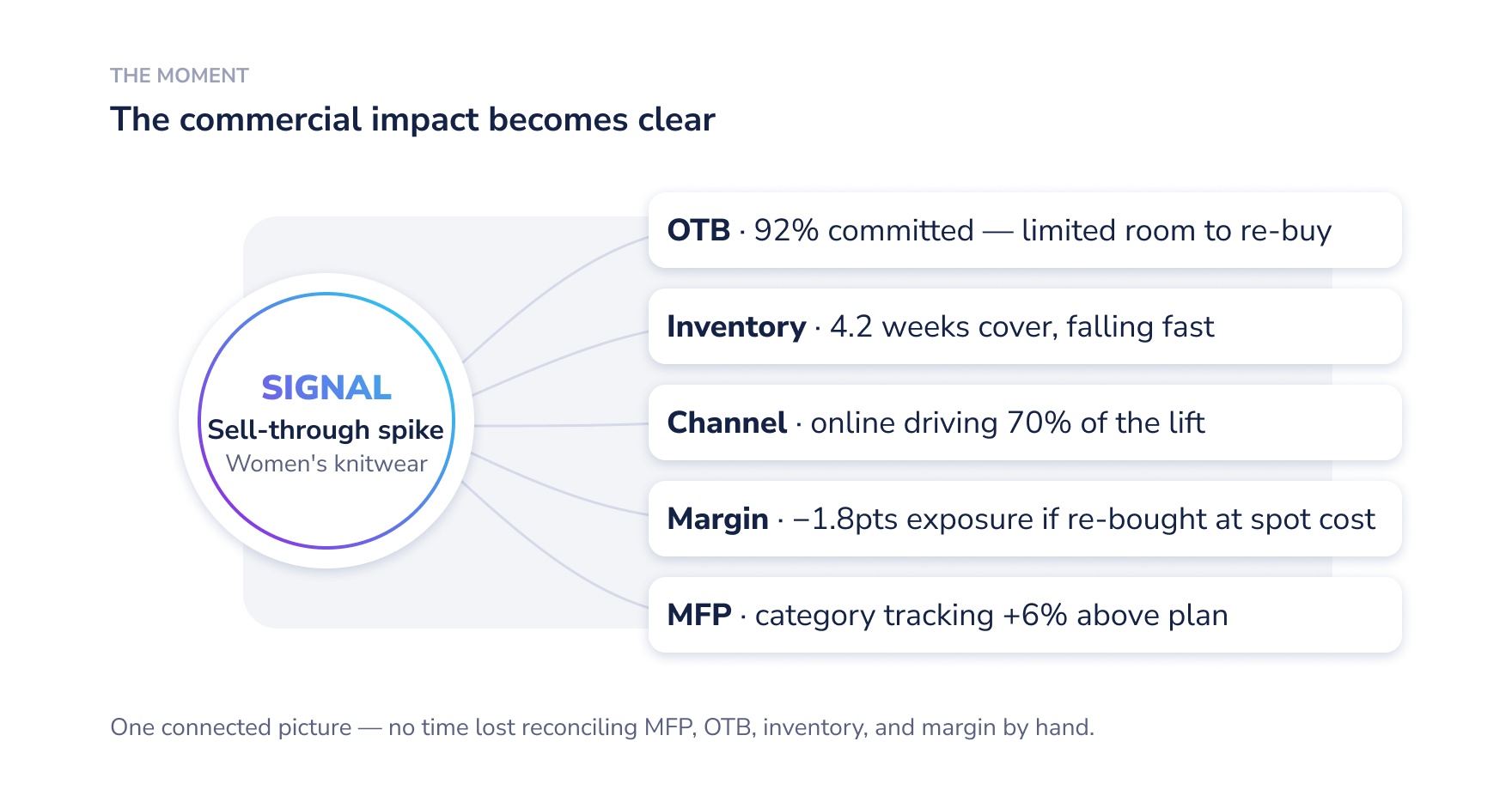
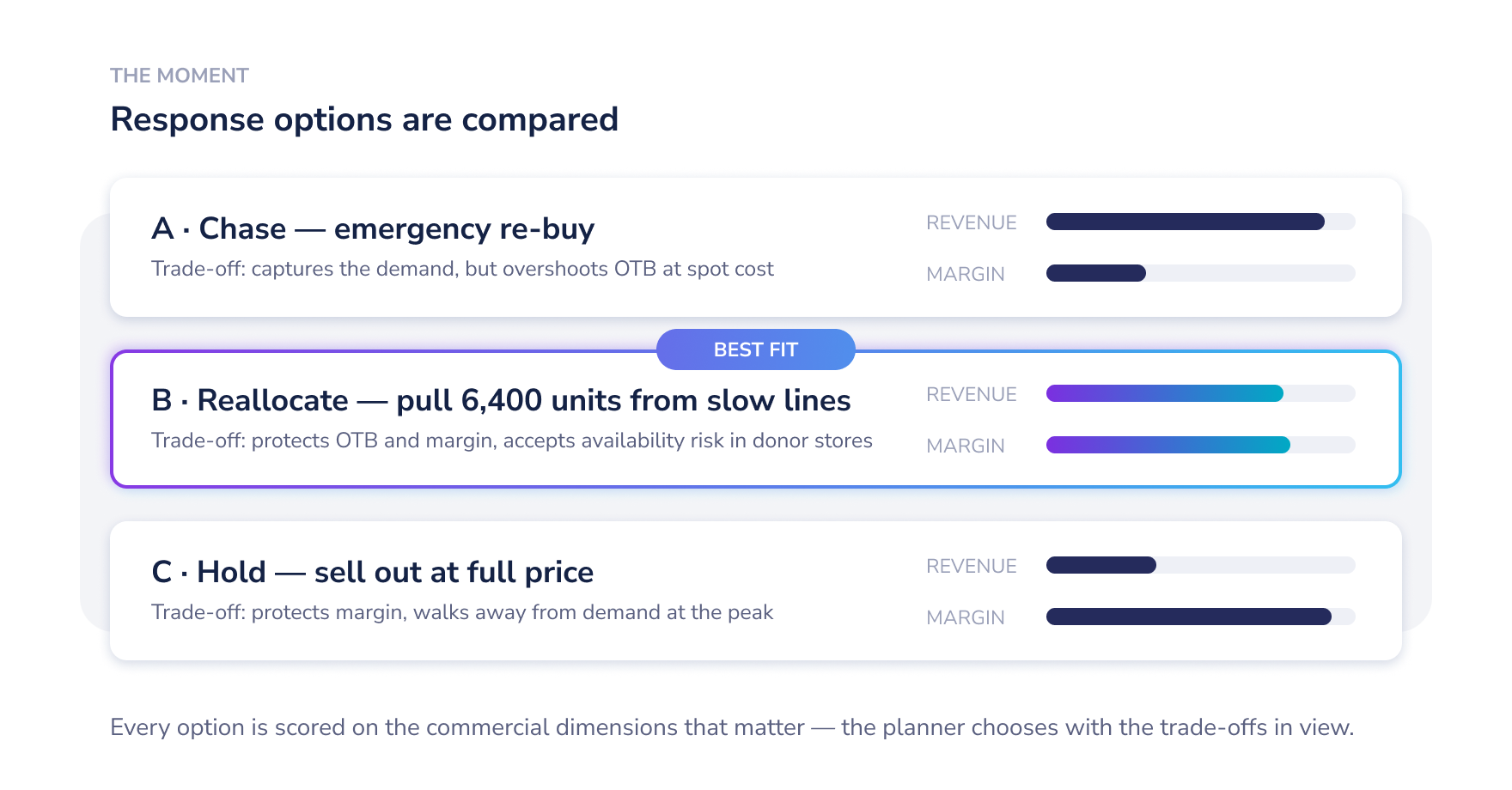
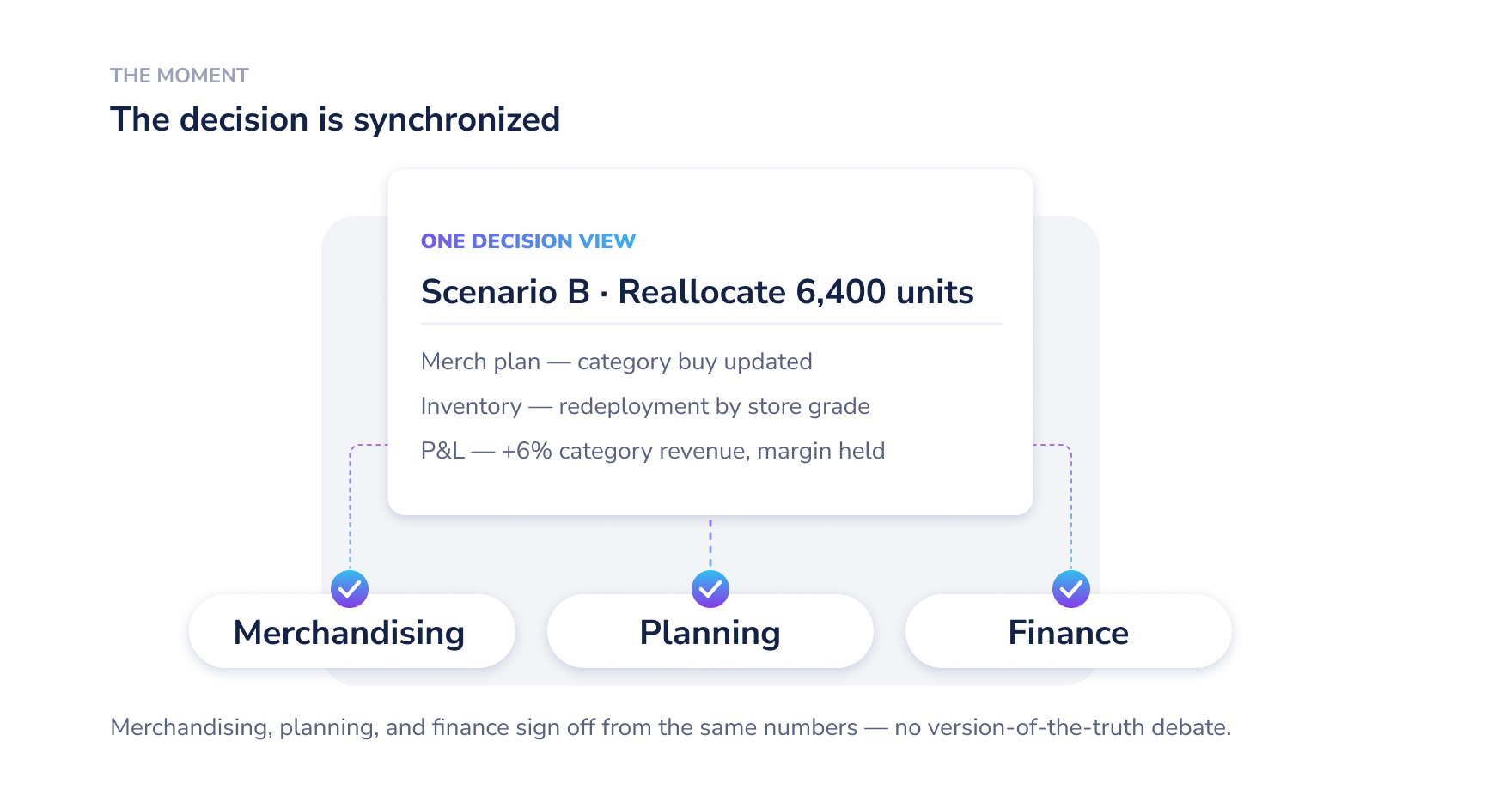
One sell-through spike, one governed planning flow — from the moment a signal forms to the moment the response is live.
Detect
Explain
Simulate
Align
Act
Why Board is different.
AI is only useful when it has the right planning context.
Many AI tools can summarize data or surface alerts. But merchandising decisions require more than summaries. Planners need to understand the relationship between category performance, OTB position, inventory risk, margin impact, and financial targets.
The Board Merchandiser Agent works inside Board’s unified merchandising planning model. That means recommendations are grounded in connected planning context, not disconnected reports or exported data.
-
MFP and OTB operate in one connected planning environment
-
Category, inventory, demand, and margin context are aligned
-
Recommendations are tied to planning logic and commercial impact
-
Planners stay in control of decisions and approvals
-
The agent supports the workflow instead of sitting outside it
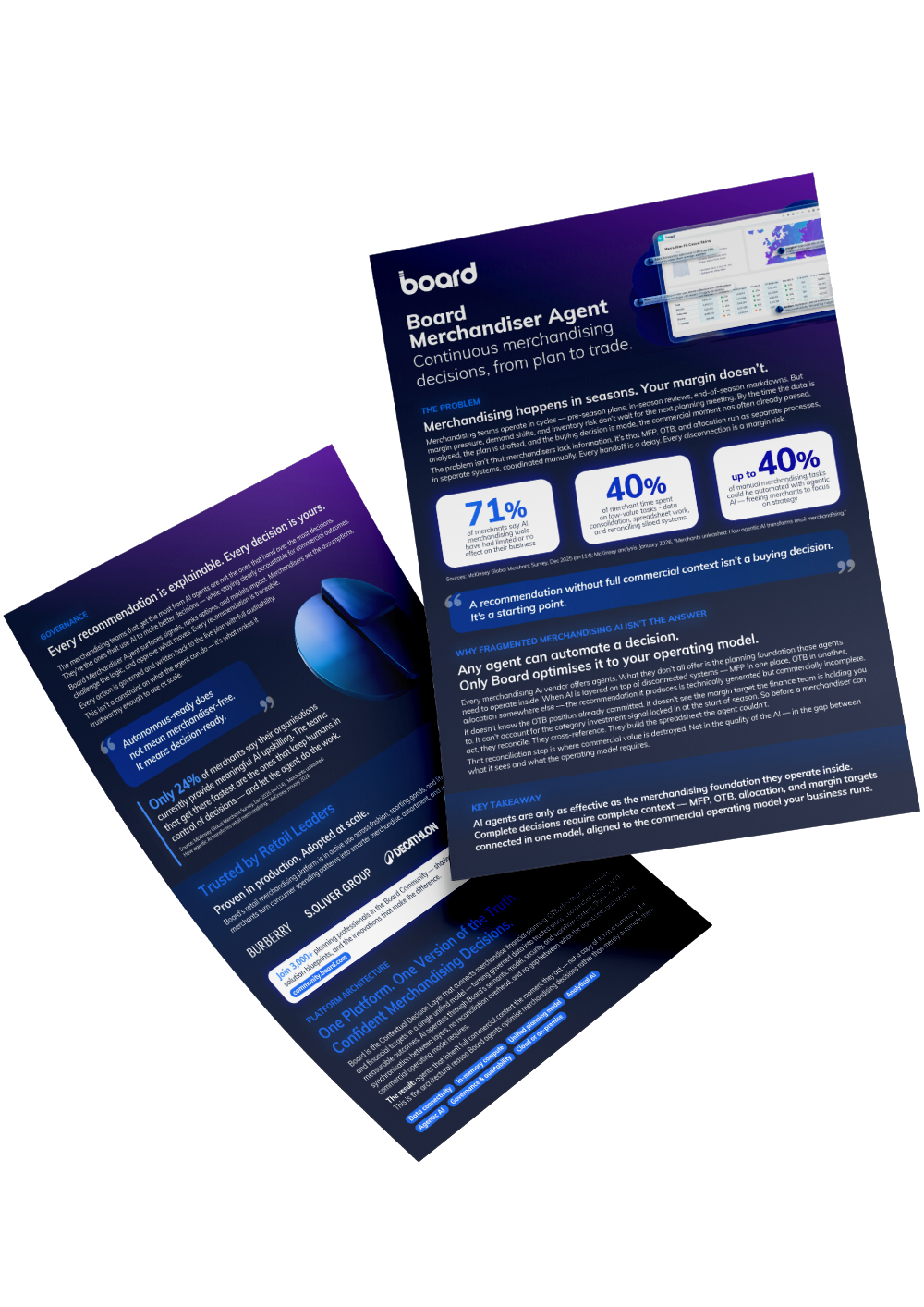
Get the guide: from merchandising cycles to continuous commercial decisions.
Learn how retail planning teams can move from disconnected planning cycles to a more continuous approach across category, inventory, OTB, and margin decisions.
What the guide covers:
-
Why fragmented merchandising planning creates margin and inventory risk
-
How pre-season and in-season planning can become more connected
-
What agentic merchandising planning means in practical terms
-
How MFP and OTB agents support faster planning decisions
-
Why unified planning context matters for AI-enabled merchandising
Explore the Board Merchandiser Agent.
See how the Board Merchandiser Agent can help your team connect MFP, OTB, inventory, and margin decisions in one continuous planning flow.