
What is Forecasting?
What is Forecasting?
Forecasting is the process of predicting future business performance using historical data, current trends, and assumptions, enabling organizations to plan ahead and make informed decisions.
Forecasting Explained
Forecasting provides organizations with a forward-looking view of performance, helping them anticipate outcomes and adjust plans as conditions change. Unlike budgeting, which sets fixed targets, forecasting is dynamic and evolves as new data becomes available.
It is used across multiple functions:
- Finance to project revenue, costs, and profitability
- Supply chain to anticipate demand and plan production
- Retail to forecast sales, inventory needs, and seasonal trends
- Operations to align resources with expected activity
Forecasting can be based on a variety of methods, including historical trend analysis, driver-based models, and increasingly, predictive analytics and AI.
In modern organizations, forecasting is rarely done in isolation. Integrated planning platforms such as Board connect forecasting with budgeting, scenario planning, and operational data, enabling more accurate and aligned planning across the business.
Forecasting is not about predicting the future with certainty. It is about creating a realistic, data-informed view of what is likely to happen so that organizations can prepare and respond effectively.
Why Forecasting Matters
Forecasting helps organizations:
- Anticipate future performance and trends
- Improve agility in changing environments
- Support proactive decision-making
- Align financial and operational plans
- Reduce uncertainty and risk
Without forecasting, organizations rely on static plans that quickly become outdated. With forecasting, they can continuously adjust expectations and actions based on the latest information.
Forecasting is especially critical in volatile markets, where demand, costs, or external conditions can change rapidly. It allows organizations to stay responsive rather than reactive.
How Forecasting Works
Collect and Prepare Data
Forecasting begins with gathering relevant data, such as:
- historical financial performance
- sales pipeline and demand signals
- market trends and external indicators
- operational data such as production or inventory levels
The quality and completeness of this data directly affect forecast accuracy.
Select Forecasting Approach
Organizations may use different approaches depending on the use case:
- Trend-based forecasting using historical patterns
- Driver-based forecasting linking outcomes to key business drivers
- Statistical or predictive models using advanced analytics
Often, a combination of methods is used to improve accuracy.
Generate Forecasts
The model produces projections for key metrics such as:
- revenue
- costs
- demand
- inventory
- cash flow
These forecasts can be created at different levels of detail, from high-level summaries to granular views by product, region, or channel.
Review and Adjust
Forecasts are reviewed and adjusted based on:
- business knowledge and context
- new data or market changes
- feedback from different functions
This ensures forecasts remain realistic and actionable.
Update Continuously
Forecasts are typically updated on a regular basis, such as monthly or quarterly. In more advanced environments, they may be updated continuously as new data becomes available.
AI Tools for Financial Planning and Forecasting
Organizations are increasingly adopting AI tools for financial planning and forecasting to enhance traditional approaches.
These tools can:
- Automate forecast generation
- Identify patterns and trends in large datasets
- Detect anomalies and outliers
- Improve accuracy over time through learning
By combining data-driven insights with business expertise, AI-enabled forecasting helps organizations produce more reliable and timely forecasts.
AI Tools for Supply Chain Forecasting
In supply chain environments, forecasting plays a critical role in balancing demand and supply.
Organizations use AI tools for supply chain forecasting to:
- Predict customer demand more accurately
- Optimize inventory levels
- Improve production and procurement planning
- Reduce stockouts and excess inventory
These capabilities are particularly valuable in industries with high variability, seasonality, or complex supply networks.
Forecasting vs Budgeting
| Forecasting | Budgeting |
Dynamic and continuously updated | Fixed and typically annual |
Focuses on expected performance | Focuses on targets and goals |
Adjusts to new data | Set at the start of the period |
Supports agility | Supports control and accountability |
Both are essential, but they serve different purposes. Budgeting sets direction, while forecasting keeps plans relevant.
Forecasting vs Scenario Planning
| Forecasting | Scenario Planning |
Predicts the most likely outcome | Explores multiple possible outcomes |
Based on current data and trends | Based on different assumptions |
Supports ongoing planning | Supports strategic decision-making |
Forecasting provides the baseline, while scenario planning explores how that baseline might change.
Examples in Practice
Finance Example
A finance team forecasts quarterly revenue based on pipeline data, conversion rates, and historical performance, adjusting projections as deals progress.
Supply Chain Example
A manufacturer forecasts demand to align production schedules and inventory levels, reducing the risk of shortages or excess stock.
Retail Example
A retailer forecasts sales for peak seasons, enabling better inventory planning, staffing, and promotional activity.
Operations Example
An operations team forecasts resource requirements based on expected activity levels, ensuring capacity is aligned with demand.
Key Benefits
- Greater visibility into future performance
- Faster and more informed decision-making
- Improved alignment across functions
- Reduced uncertainty and risk
- More accurate and responsive planning
Related Terms
FAQs
See how Board enables AI forecasting
Board Foresight is an enterprise-grade AI forecasting software solution that unifies predictive AI, econometric modeling, and operational demand forecasting inside one continuous planning platform.
Explore Board Foresight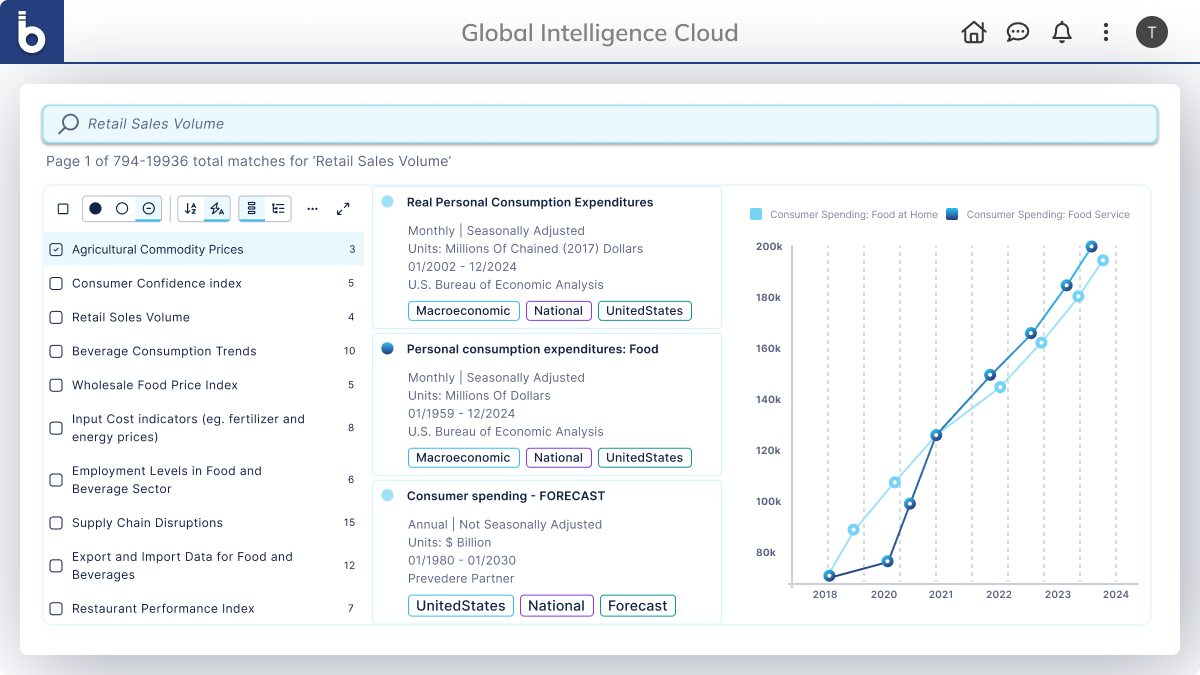

Let’s see what Board can do for you.
Get a tour of the Agentic Planning Platform in action.