
What is Predictive Planning?
What is Predictive Planning?
Predictive planning is the use of data, statistical models, and machine learning to forecast future outcomes and improve planning decisions.
Predictive Planning Explained
Predictive planning builds on traditional planning methods by using advanced analytics to identify patterns in data and generate more informed predictions about future performance. Instead of relying only on historical averages or manual judgment, predictive planning applies analytical techniques to large and varied datasets to improve speed, accuracy, and insight.
It is used across finance, supply chain, retail, and operations to anticipate outcomes such as revenue trends, customer demand, inventory needs, margin pressure, workforce requirements, or cash flow changes. This makes it especially valuable in environments where complexity, volatility, or data volume make manual planning slower or less reliable.
Predictive planning does not replace human judgment – it strengthens it. The goal is to help decision-makers move from reactive planning to more proactive and data-informed planning. Teams can identify likely outcomes earlier, test assumptions more effectively, and focus attention on the areas that matter most.
In modern planning platforms such as Board, predictive planning can be embedded within broader processes like forecasting, scenario planning, and continuous planning. This helps organizations bring advanced analytics into practical business workflows rather than treating it as a separate activity.
Why Predictive Planning Matters
Predictive planning helps organizations:
- Improve forecast accuracy by using broader and richer data inputs
- Identify trends, anomalies, and risks earlier
- Reduce manual effort in repetitive planning tasks
- Support faster and more confident decision-making
- Align planning more closely with real-world business conditions
As planning cycles accelerate and market conditions shift more quickly, predictive planning gives organizations a way to stay ahead of change rather than simply reacting after the fact.
It is especially valuable for complex organizations that need to coordinate decisions across functions. A predictive model may, for example, help finance anticipate revenue shifts, supply chain anticipate demand changes, and retail teams anticipate seasonal buying behavior – all from connected data and assumptions.
How Predictive Planning Works
Gather and Prepare Data
The process begins with collecting the relevant data needed to predict future outcomes. This may include:
- historical financial results
- sales and pipeline data
- market indicators
- supply chain and inventory data
- customer behavior data
- seasonal and external factors
Data quality matters here. Strong predictive planning depends on trusted, connected, and well-structured data.
Apply Analytical Models
Organizations then use statistical techniques or machine learning models to identify patterns, relationships, and likely future outcomes. Depending on the use case, this may involve:
- trend extrapolation
- regression analysis
- time-series forecasting
- demand prediction models
- anomaly detection
The aim is to produce forecasts or insights that are more adaptive and data-driven than manual planning alone.
Interpret the Output
The model output must then be reviewed in business context. Teams interpret the predictions, compare them with existing plans, and assess whether changes are needed. This is where human expertise remains essential.
For example, a model may predict demand growth, but business leaders still need to decide how to respond in terms of production, staffing, pricing, or inventory.
Embed into Planning Processes
The strongest predictive planning approaches do not stop at producing a forecast. They integrate predictions into live business workflows such as:
- financial forecasting
- supply chain planning
- retail demand planning
- scenario modeling
- executive decision support
Predictive Planning vs Traditional Forecasting
Predictive Planning | Traditional Forecasting |
Uses advanced analytics and machine learning | Often relies on manual assumptions and historical averages |
Can process larger and more varied datasets | Often limited to narrower datasets |
More adaptive to change | Often slower to respond |
Designed to improve decisions proactively | Often focused on periodic forecast updates |
Traditional forecasting remains important, but predictive planning enhances it by bringing more analytical power and responsiveness into the process.
Examples in Practice
Finance Example
A finance team uses predictive planning to identify likely revenue shortfalls earlier in the quarter based on sales pipeline quality, conversion rates, and historical close patterns. This helps adjust forecasts before the reporting cycle ends.
Supply Chain Example
A manufacturer uses predictive planning to anticipate changes in customer demand by combining historical orders, seasonality, and market signals. This improves production planning and reduces the risk of overstocking or stockouts.
Retail Example
A retailer uses predictive planning to forecast demand at category and store level, helping optimize inventory allocation, promotions, and staffing ahead of peak periods.
Executive Planning Example
Leadership uses predictive signals to identify emerging margin pressure caused by cost inflation, demand softening, or changing product mix. This supports earlier intervention and better scenario planning.
Key Benefits
- More accurate and responsive forecasts
- Earlier visibility into risks and opportunities
- Reduced manual effort in complex planning processes
- Better alignment across finance, supply chain, and commercial teams
- Stronger decision-making grounded in data and business context
Related Terms
FAQs
See how Board enables predictive planning
Board Foresight is an enterprise-grade AI forecasting software solution that unifies predictive AI, econometric modeling, and operational demand forecasting inside one continuous planning platform.
Explore Board Foresight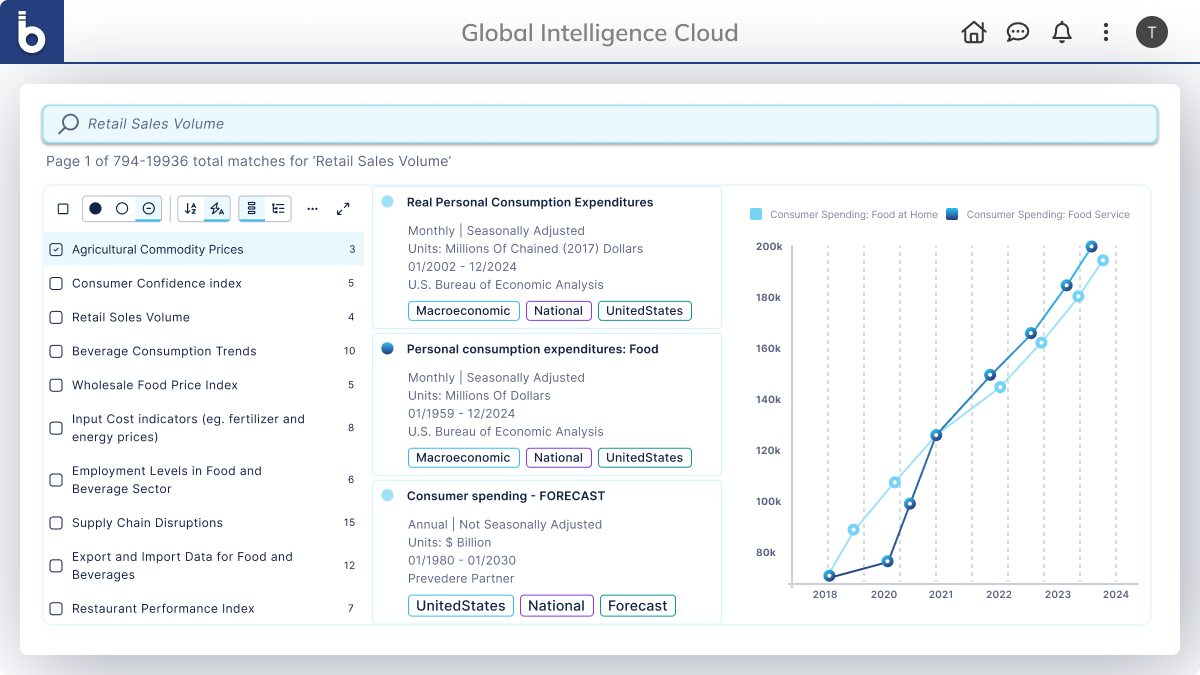

Let’s see what Board can do for you.
Get a tour of the Agentic Planning Platform in action.