
What is a Rolling Forecast?
What is a Rolling Forecast?
A rolling forecast is a continuously updated forecast that maintains a constant forward-looking time horizon, such as 12 or 18 months.
Rolling Forecast Explained
A rolling forecast replaces fixed, period-based forecasting with a continuous approach. Instead of creating a forecast for a specific year and stopping at year-end, organizations update the forecast regularly and extend it forward as each period closes.
For example, a 12-month rolling forecast always looks 12 months ahead. At the end of each month, the forecast is updated with actual results and extended by one additional month.
This approach ensures that organizations always have an up-to-date view of future performance, rather than relying on outdated projections.
Rolling forecasts are widely used across finance, supply chain, and operations because they support more agile and responsive planning. They are often enabled through integrated planning platforms such as Board, which automate updates and connect forecasts to real-time data.
Rolling forecasts are a key component of continuous planning, helping organizations move away from static annual cycles toward more dynamic and adaptive planning processes.
Why Rolling Forecasts Matter
Rolling forecasts help organizations:
- Maintain an up-to-date view of future performance
- Respond more quickly to changes in business conditions
- Reduce reliance on static annual plans
- Improve decision-making with current data
- Align planning across finance and operations
In fast-changing environments, annual forecasts can quickly become irrelevant. Rolling forecasts ensure that planning remains relevant and actionable throughout the year.
They also support better coordination across teams, since all functions are working from the same current view of the future.
How Rolling Forecasts Work
Define a Planning Horizon
Organizations select a fixed forward-looking period, such as:
- 12 months
- 18 months
- 24 months
This horizon remains constant over time.
Update with Actuals
At the end of each period, actual results are incorporated into the forecast. This replaces previous estimates with real data.
Extend the Forecast
As each period closes, a new future period is added to maintain the constant horizon.
For example:
- At the end of January, February to January of the following year is forecast
- At the end of February, March to February of the following year is forecast
Adjust Assumptions
Forecast assumptions are updated based on:
- latest performance
- market conditions
- operational changes
- new business insights
This ensures the forecast reflects current reality.
What is a Continuous Planning Platform?
A continuous planning platform enables organizations to:
- Update plans and forecasts in real time
- Integrate budgeting, forecasting, and scenario planning
- Align financial and operational plans continuously
Rolling forecasts are a core component of this approach, ensuring that organizations always have a current and forward-looking view of performance.
Rolling Forecast vs Traditional Forecast
Rolling Forecast | Traditional Forecast |
Continuously updated | Fixed period |
Always forward-looking | Ends at a defined point |
Dynamic and adaptive | Static |
Supports continuous planning | Supports periodic planning |
Rolling Forecast vs Budget
Rolling Forecast | Budget |
Predicts future performance | Sets targets |
Updated regularly | Typically fixed annually |
Flexible and adaptive | Structured and controlled |
Rolling forecasts complement budgets by keeping plans relevant after the budget is set.
Examples in Practice
Finance Example
A finance team maintains a 12-month rolling forecast, updating revenue and cost projections each month based on actual results and new assumptions.
Supply Chain Example
A manufacturer uses rolling forecasts to continuously adjust production plans based on updated demand forecasts.
Retail Example
A retailer updates sales forecasts monthly during peak seasons, adjusting inventory and staffing plans accordingly.
Executive Planning Example
Leadership uses rolling forecasts to monitor performance trends and adjust strategy throughout the year rather than waiting for annual planning cycles.
Key Benefits
- More accurate and up-to-date forecasts
- Increased agility and responsiveness
- Better alignment across teams
- Improved decision-making
- Reduced reliance on outdated plans
Related Terms
FAQs
See how Board transforms rolling forecasting
Board’s planning, budgeting, and forecasting software streamlines financial processes, speeds up reporting cycles through automation, and ensures accuracy with real-time data integration.
Explore Board's PB&F solution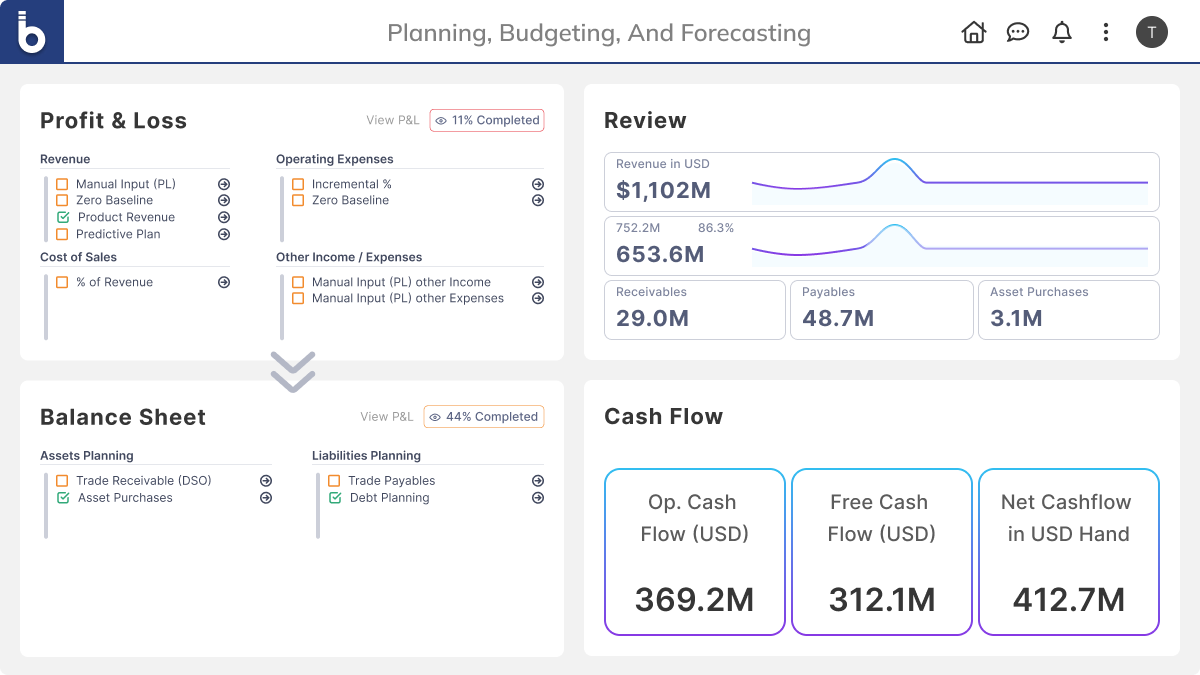

Let’s see what Board can do for you.
Get a tour of the Agentic Planning Platform in action.