
What is Retail Planning?
What is Retail Planning?
Retail planning is the process of aligning demand, inventory, pricing, and merchandising decisions to maximize sales, margins, and customer satisfaction across retail channels.
Retail Planning Explained
Retail planning is a core capability for retailers, enabling them to balance customer demand with inventory availability, pricing strategies, and financial targets. It ensures that the right products are available at the right time, in the right locations, and at the right price.
Unlike general business planning, retail planning is highly dynamic and influenced by factors such as seasonality, promotions, customer behavior, and market trends. It requires continuous coordination between merchandising, supply chain, finance, and store operations.
Retail planning typically brings together several specialized processes, including:
- merchandise planning
- assortment planning
- demand forecasting
- inventory planning
- pricing and promotion planning
These processes must work together to ensure that decisions about what to sell, how much to stock, and how to price products are aligned.
In modern retail environments, planning is increasingly omnichannel, covering both physical stores and digital channels. This adds complexity, as organizations must manage inventory, demand, and pricing across multiple touchpoints.
Integrated planning platforms such as Board enable retailers to connect financial planning with merchandising and supply chain decisions, providing a unified view of performance and enabling more coordinated decision-making.
Retail planning is ultimately about balancing three key objectives:
- maximizing sales and revenue
- optimizing margins and profitability
- maintaining high levels of customer satisfaction
Why Retail Planning Matters
Retail planning helps organizations:
- Ensure product availability across channels
- Optimize inventory levels and reduce excess stock
- Improve sales and margin performance
- Align merchandising, supply chain, and financial plans
- Respond quickly to changes in demand and customer behavior
Retail environments are highly competitive and fast-moving. Poor planning can lead to:
- stockouts and lost sales
- excess inventory and markdowns
- missed promotional opportunities
- misalignment between supply and demand
Effective retail planning enables organizations to anticipate demand, allocate inventory efficiently, and make better pricing and merchandising decisions.
It also supports financial performance by ensuring that sales, margins, and inventory investments are aligned with business targets.
How Retail Planning Works
Demand Forecasting
Retailers forecast demand based on:
- historical sales data
- seasonality and trends
- promotions and campaigns
- external factors such as weather or economic conditions
This provides the foundation for planning decisions.
Merchandise Planning
Retailers define high-level financial and product plans, including:
- sales targets
- margin expectations
- inventory investment
This aligns merchandising strategy with financial goals.
Assortment Planning
Decisions are made about:
- which products to offer
- how products are grouped into categories
- how assortments vary by store, region, or channel
This ensures that product offerings match customer demand.
Inventory Planning and Allocation
Inventory levels are planned and distributed across locations to ensure availability while minimizing excess stock.
Pricing and Promotion Planning
Retailers plan:
- pricing strategies
- discounting and markdowns
- promotional campaigns
These decisions directly influence demand, sales, and margins.
Continuous Monitoring and Adjustment
Retail plans are updated regularly based on:
- actual sales performance
- changing demand patterns
- inventory levels
This enables retailers to respond quickly to changing conditions.
Retail Planning vs Supply Chain Planning
Retail Planning | Supply Chain Planning |
Focuses on customer demand, merchandising, and sales | Focuses on supply, production, and logistics |
Driven by consumer behavior | Driven by operational constraints |
Includes pricing and promotions | Includes production and distribution |
Commercial and customer-focused | Operational and efficiency-focused |
The two are closely connected. Retail planning drives demand, while supply chain planning ensures that demand can be fulfilled.
Retail Planning vs Merchandise Planning
Retail Planning | Merchandise Planning |
Broad, end-to-end retail planning process | Focused on financial and product planning |
Includes forecasting, inventory, and pricing | Focuses on sales, margin, and inventory targets |
Cross-functional | Primarily merchandising-focused |
Merchandise planning is a key component of retail planning.
Examples in Practice
Apparel Retail Example
A fashion retailer plans seasonal collections, forecasting demand for different styles and sizes, allocating inventory across stores, and adjusting pricing through promotions and markdowns.
Grocery Retail Example
A grocery retailer forecasts demand for perishable goods, ensuring inventory levels are aligned with expected sales to minimize waste and maximize availability.
Omnichannel Example
A retailer coordinates inventory across physical stores and e-commerce channels, ensuring customers can purchase products seamlessly across different touchpoints.
Executive Planning Example
Leadership evaluates trade-offs between sales growth, margin performance, and inventory investment, using retail planning insights to guide strategic decisions.
Key Benefits
- Improved product availability and customer experience
- Reduced inventory costs and markdowns
- Increased sales and margin performance
- Better alignment across merchandising, supply chain, and finance
- Greater agility in responding to market changes
Related Terms
FAQs
See how Board transforms retail planning
Turn consumer spending patterns into smarter merchandise, assortment, and replenishment plans – aligning product strategy to customers’ needs.
Explore Board's retail planning solutions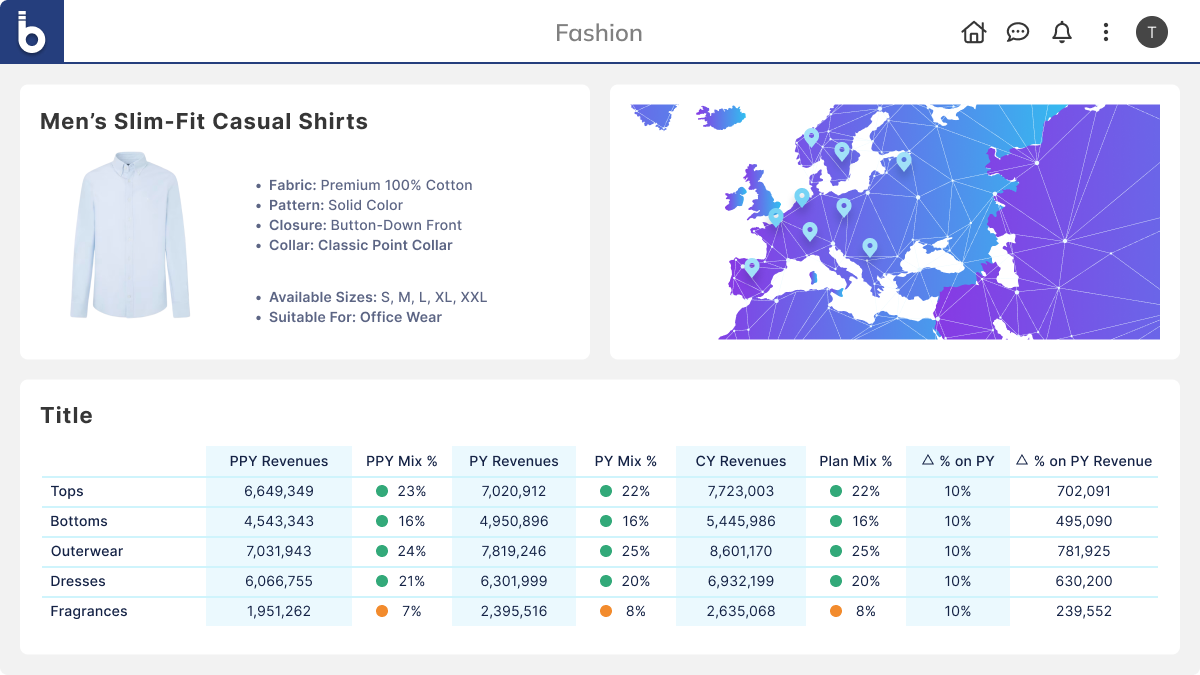

Let’s see what Board can do for you.
Get a tour of the Agentic Planning Platform in action.