This website will offer limited functionality in this browser. We only support the recent versions of major browsers like Chrome, Firefox, Safari, and Edge.
Board’s Latest Release Advances Continuous Planning with More Capable AI, Connected Planning Experiences, and Enterprise-Ready Governance
See how Board’s newest innovations help teams move from static planning cycles to faster, more adaptive decision-making with trusted AI, unified workflows, and deeper business insight.
Earlier this year, we introduced Board Agents, a new generation of domain-specific, persona-based AI designed to help finance and operational teams make faster, more confident decisions using trusted business data. Rather than simply answering questions, Board Agents analyze change, explain what is driving it, evaluate alternatives, and help planners take action within the context of their business.
Our latest release, available today, builds on that foundation.
Across finance, supply chain, retail merchandising, and the Board platform itself, we’re expanding how AI is embedded into everyday planning while strengthening the enterprise foundation that makes those experiences trustworthy, governed, and scalable.
More importantly, this release marks an important step in the evolution of Board Agents. Beyond expanding into new business domains, we’re making our AI more interactive, more connected to planning workflows, easier to govern, and ready to scale across the enterprise.
In this release you’ll see four major advances:
More capable domain-specific agents that bring AI deeper into finance, supply chain, and merchandising workflows.
A richer, more connected planning experience that helps users move seamlessly from insight to action.
A stronger enterprise AI foundation designed for performance, scalability, and future multi-agent planning.
Operational maturity for enterprise AI, with the governance, security, and administration organizations need to deploy AI confidently.
Together, these innovations continue our vision for Continuous Planning, where trusted business data, AI, and operational intelligence work together to help organizations continuously adapt as business conditions change.
AI Across Every Business Function
Earlier this year, we introduced our Office of Finance Board Agents for enterprise planning. Our latest release expands Board Agents across the Office of Finance, Supply Chain, and Retail Merchandising, bringing domain-specific AI directly into the planning workflows where business decisions are made. Collectively, these new capabilities make Board Agents more capable, more interactive, and better equipped to support enterprise planning at scale.
Delivering an Agentic Office of Finance
Finance leaders need AI that connects financial close, consolidation, planning, and performance management into one continuous decision-making process.
That’s why this release significantly expands the capabilities of our Board Office of Finance Agents.
The FP&A Agent now goes beyond traditional variance reporting with new Causal Performance Analysis that explains the business drivers behind financial results, generates executive-ready narratives, and helps finance teams understand not just what happened, but why. At the same time, the Controller Agent brings accounting-aware intelligence to financial close with expanded use cases for Reconciliation Intelligence, Close Validation & Insights, and AI-assisted Account and Cash Flow Mapping that improve financial integrity while accelerating the close.
Together, the Board Office of Finance Agents create a more connected Office of Finance, with new collaborative capabilities including Cross-Statement Coherence, Group Performance Analysis, Consolidated Liquidity & Scenarios, Reconciliation Intelligence, and Close Validation & Insights.
The Merchandising System is Now Continuous
Our latest release introduces the Board Merchandiser Agent, extending Board Agents into merchandising planning by embedding AI directly into the workflows merchants already use every day.
The Board Merchandiser Agent operates inside Board’s unified merchandising planning model, where Merchandise Financial Planning, Open-to-Buy, inventory, and commercial finance already share the same business context. Every recommendation is grounded in the complete commercial picture, not isolated planning signals.
Sorry, this video can’t be played right now. Please try again later.
The Merchandiser Agent brings intelligence across three connected merchandising use cases:
Merchandise Financial Planning: the agent helps planners classify categories as growth, core, or decline, review planning accuracy across sales, margin, markdowns, and pricing, and identify where forecast assumptions succeeded or failed to strengthen future plans.
Open-to-Buy: the agent continuously monitors inventory health and 13-week OTB performance, prioritizes the planning lines with the greatest commercial impact, identifies the root causes behind inventory risk, and recommends corrective actions before issues compound into costly markdowns or lost sales.
Allocation & Replenishment: extends that intelligence into in-season execution, connecting OTB monitoring with physical stock movement across channels and stores. Planned capabilities include detecting stock imbalances and size or color risks, recommending inventory reallocation and store prioritization, and helping merchants improve availability, sell-through, and inventory productivity.
Together, these capabilities create a continuous merchandising planning loop, connecting category strategy, buying decisions, inventory execution, demand signals, and financial outcomes so every merchandising decision becomes faster, more complete, and commercially grounded.
Build Autonomous-Ready Supply Chains
Our latest release introduces the Board Supply Chain Agent to continuously sense supply chain disruptions, evaluate trade-offs, synchronize operational and financial decisions, and respond as conditions change.
Sorry, this video can’t be played right now. Please try again later.
The Supply Chain Agent brings intelligence across three connected supply chain planning use cases:
Risk & Opportunity, helping planners identify emerging demand volatility, supply disruptions, and business risks before they affect performance.
Meeting Insights, transforming S&OP discussions into structured themes, decisions, and follow-up actions that improve organizational alignment.
Constraint Intelligence, identifying capacity constraints, evaluating operational trade-offs, and simulating feasible corrective actions before decisions are committed.
The result is faster, more synchronized decision-making across the supply chain, not simply faster analysis. Organizations gain a stronger foundation for more responsive, AI-enabled planning while keeping planners firmly in control of every decision.
More Intelligent, Connected Planning Experiences
AI becomes most valuable when it becomes part of the planning workflow, not a separate destination. That’s why this release introduces a richer, more connected planning experience.
This release introduces our new Agentic Workflow Integration. Board Agents can now transform AI-generated insights into actionable planning inputs by sending structured results directly into Smart Import. Rather than manually recreating recommendations inside planning models, users can move from analysis to execution in a single workflow while remaining fully in control of the final data ingestion step. This shortens the path from insight to action while keeping users in control.
Sorry, this video can’t be played right now. Please try again later.
Board Agent responses are now interactive. Users can now sort, filter, reorganize, copy, and export AI-generated tables directly from the conversation, making it easier to explore insights without interrupting the planning process.
Planning itself also becomes more personal with enhanced MyViews, improved design mode awareness, reusable layouts, and further advancements for the Board for Microsoft 365add-on including enhanced reporting, localized user experiences, and streamlined migration from our previous Board for Microsoft Office add-in.
Sorry, this video can’t be played right now. Please try again later.
Smarter Planning, Forecasting, and Analytical Intelligence
Better planning depends on better understanding, not simply more data. This release introduces new analytical capabilities that improve both transparency and confidence across planning workflows.
Board Operational Forecasting now supports a new univariate forecasting approach that enables planners to compare multiple statistical forecasting models side by side, making it easier to validate assumptions, evaluate forecasting accuracy, and select the best model for each business scenario.
We’re also expanding analytical intelligence across the platform through enhanced causal analysis, richer planner personalization, improved distinct-count calculations, and AI capabilities that better understand the business context behind enterprise data.
Together, these enhancements help organizations move beyond reporting what happened to understanding why it happened and what should happen next.
Enterprise AI and Platform Foundation
As organizations adopt AI across more planning processes, the technology behind those experiences becomes just as important as the experiences themselves.
Every Board Agent now runs on a new orchestration foundation built on the Microsoft Agent Framework on Microsoft Azure. This enterprise-grade architecture delivers greater scalability, observability, and parallel multi-agent orchestration, providing the foundation for increasingly sophisticated planning workflows.
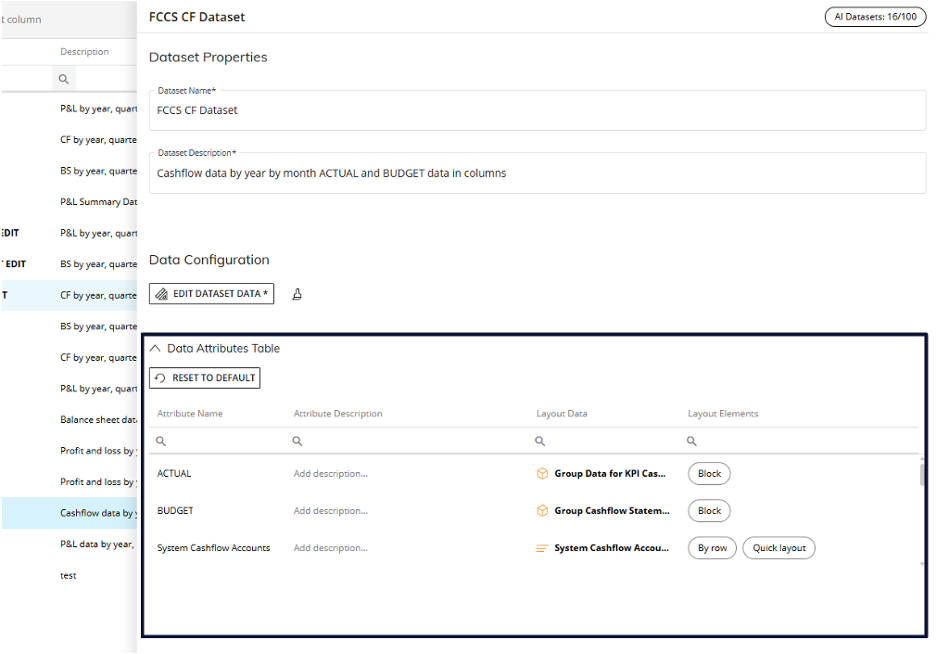
We’re also making Board Agents more business-aware through new Dataset Attributes. Developers can now enrich datasets with business-friendly descriptions that help agents understand company-specific terminology and planning concepts. Instead of relying on technical metadata alone, Board Agents can interpret enterprise data using the language of the business, improving accuracy, consistency, and trust across every conversation.
Together, these platform innovations provide the enterprise-ready foundation that will power the next generation of Board Agents.
Enterprise AI Commercialization and Trust
We understand that enterprise AI isn’t just about new capabilities. Organizations also need a clearer path to adoption, transparent governance, and the operational controls to scale AI with confidence.
Our latest release introduces a new consumption-based licensing model for Board Agents, giving organizations the flexibility to expand AI across business functions through a shared pool of API Credits. The new licensing model also provides enhanced visibility into usage, centralized administration, and new controls for AI enablement to make it easier to manage adoption as AI usage grows.
We’re also releasing our new Board Agent Version Management, giving customers complete control over when new agent capabilities are adopted, with in-product release notes, compatibility guidance, and version controls that preserve existing implementations while simplifying upgrades.
Finally, we’re continuing to strengthen the trust that underpins every Board Agent with expanded regional deployment and data residency options, improved transparent AI experiences, enterprise security controls, and governance aligned with evolving regulatory requirements to help organizations deploy AI with confidence, knowing every recommendation is grounded in trusted business data and supported by enterprise-grade safeguards.
Simplified Administration and Enterprise AI Governance
Our latest release also introduces new capabilities that simplify administration while strengthening governance across the Board platform.
Administrators can now centralize user lifecycle management across Board products, while improved Managed Identity support strengthens cloud security by reducing reliance on stored credentials. Enhanced identity management, Subscription Hub improvements, multi-region Operational Forecasting deployments, and expanded platform administration capabilities help organizations deploy AI and planning at enterprise scale with greater consistency and control.
With more capable domain-specific agents, more intelligent planning experiences, a stronger enterprise AI foundation, and enterprise-ready governance, our latest release helps organizations move beyond isolated AI tools toward truly continuous, intelligent planning.
That’s the future we’re building. One where humans and AI collaborate seamlessly, every recommendation is grounded in trusted business context, and organizations can make faster, more aligned, and more confident decisions as business conditions change.