

Katja Makiol
We came from a very Excel-based world, with different systems, charts of accounts, and cost structures across the group. Our goal was to stop comparing apples and pears and create genuinely comparable figures.
Video Interview with Katja Makiol
Watch the video to hear how the DS Group is building a more data-driven future with Board.
Sorry, this video can’t be played right now. Please try again later.
Why This Story Matters
Diersch & Schröder Group (DS Group) shows how a diversified group can establish consistent management reporting without forcing every business onto the same operational system. By first defining a common management model and then using Board to connect data, workflows, and analysis, the group created a trusted reporting foundation that can now expand into integrated financial planning and AI-supported decision-making.
- One reporting structure creates comparability. A decentralized group can align management information across companies, systems, and business models.
- Automation returns time to controlling. Connected data reduces repetitive preparation and creates more capacity for analysis and business steering.
- A phased approach lowers transformation risk. DS Group established live management reporting first and is now extending the platform into financial planning.
The goal is to stop discussing whether a number is correct and start discussing what the number means. By connecting the source systems, validating the data, and enabling drill-down to document level, Board creates that transparency.

Lukas Zimmer
Key Learnings
The project offers four practical lessons for organizations modernizing group reporting and financial planning:
- 1: Define the management model before selecting technology. DS Group and PwC first aligned reporting structures, management levels, and processes before evaluating platforms.
- 2: Connect heterogeneous systems through common logic. Mapping, validation, and standardized structures made figures comparable without replacing every underlying ERP system.
- 3: Treat go-live as an organizational change. Training, clear responsibilities, notifications, and stakeholder engagement were essential to adoption across the group.
- 4: Use AI to accelerate trusted analysis. The Board Agent pilot showed how structured prompts, defined datasets, and validation rules can support faster, more consistent analysis and management-ready insights.
Diersch & Schröder Group: A diversified group with complex management requirements
Founded in Bremen in 1920, the Diersch & Schröder Group has developed from a regional oil business into a diversified international group. Its largest area is Energy, which includes fuel wholesale, end-customer operations, service stations, and tank storage. The Chemicals segment produces formulations for industries including agriculture, metalworking, and cleaning products. Young Business supports emerging companies and new business models.
Across these activities, the group operates more than 20 companies with different business models, accounting structures, and source systems. That diversity made it difficult to produce a consistent group-wide view of performance.
The Challenge: Manual reporting made consistent comparison difficult
Before Board, management reporting relied heavily on manually prepared Excel files that were converted into static PDF reports. This limited users’ ability to interact with the data, investigate variances, or drill into supporting detail. The underlying environment included AS/400, SAP, several Microsoft Dynamics 365 Business Central systems, and other local applications. The group also lacked fully consistent charts of accounts and cost-accounting structures.
The fragmented reporting environment created several operational and analytical challenges:
- information had to be extracted and transferred manually
- companies used different financial and management structures
- controllers had to maintain complex mapping logic
- spreadsheet formulas increased process and error risk
- static PDF reports limited interaction with the underlying data
- static reports offered limited analytical flexibility
- Group Controlling frequently had to follow up separately for explanations
- teams spent too much time preparing data and too little time analyzing it
The workload left too little time for analysis, issue identification, and decision support. Diersch & Schröder therefore needed a trusted group-wide reporting foundation that could improve transparency and support faster management decisions.
Before Board, much of our time went into collecting, consolidating, and checking data. The real objective was to create transparency and give Controlling more time to understand performance and support the business.
Katja Makiol
Why Diersch & Schröder Group selected Board for reporting and unified planning
DS Group and PwC defined the group’s target management and reporting model — information model, management levels, reporting matrix and calendar, and the target monthly process — before evaluating any platform.
The team then assessed candidate platforms against that target state. Some of the alternatives were primarily focused on Finance, while the DS Group wanted a platform that could support broader business use cases over time. Board was selected because it best matched the group’s management model, addressed immediate management reporting requirements, and provided the flexibility to expand into integrated planning, data analysis, AI, and future use cases beyond Finance.
Lukas Zimmer
The full value of finance transformation comes when process design, technology, data, and AI work together. Board was the right fit for Diersch & Schröder because it addressed immediate reporting needs without limiting the group to a finance-only platform.
The Solution: Establishing Board as the unified platform for reporting, planning, and analysis
The first implementation phase focused on management reporting. Board connects the group’s various source systems and applies standardized mapping and validation logic before data enters the reporting process. This helps ensure that decision-makers work with consistent information.
The Board reporting model reflects DS Group’s organizational and management structure across the following levels:
- group
- three business segments
- business units
- legal entities
- accounts
- individual source documents
Management Reporting provides three screens for each level of management:
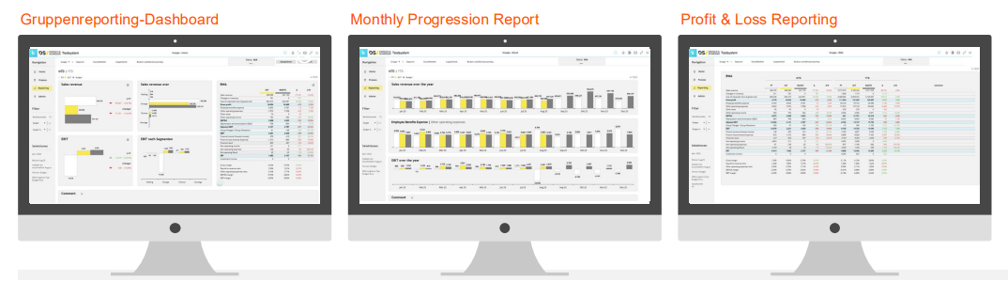
Users can move between current results, prior-year figures, budgets, monthly views, and year-to-date performance. They can also drill from a group KPI down through the management hierarchy to individual accounts and supporting ERP documents.
Embedding commentary and approvals into monthly reporting
Board also structures the monthly submission and commentary process. Each company’s reporting status is visible centrally. Material deviations must be explained before an entity or business area can submit its figures for approval. This gives Group Controlling the explanations together with the reported figures, rather than requiring repeated follow-up through emails and separate conversations.
Katja Makiol
With Board, we are creating consistent reporting across the group. The figures, explanations, and supporting detail come together in one process, and we are on a very good path toward a common view of performance.
Combining structured design with agile implementation
PwC supported the project from initial process design through implementation and adoption. The early solution-design phase defined the target architecture, dimensions, data structures, and infrastructure. The teams then moved into an agile, sprint-based implementation.
Katja Makiol and her team were involved early in testing and development. They were also enabled to make changes and implement selected elements independently. The Go-live included more than technical deployment: the project team trained users, introduced notifications and responsibilities, and worked with the operating companies to establish the new reporting process.
The Benefits: Clearer information, faster analysis, and more time for controlling
- Controllers spend less time on manual data prep. Direct system connections and standardized mapping reduce repeated extraction, consolidation, and spreadsheet handling.
- Companies across the group can now compare figures on equal terms. A common information and management model helps DS Group compare performance across different companies and business areas.
- Teams spend less time debating the numbers and more time discussing what they mean. Validation rules and document-level drill-down mean people trust the figures are right, so the conversation moves straight to what to do about them.
- Decision-makers pull up current management information in minutes, not days. Current KPIs, budget comparisons, prior-year figures, and detailed analyses are available directly in Board.
- Teams send fewer follow-up emails. Commentary requirements, workflows, approvals, and status monitoring ensure that explanations accompany material deviations, reducing manual follow-ups between Group Controlling and the operating companies.
- Group Controlling spends less time chasing data and more time on analysis and decision support. That shift, from collecting numbers to interpreting them, is what the project set out to achieve.
Katja Makiol
Before Board, our controllers spent days, and sometimes even weeks, compiling and processing information. By reducing that manual effort, Board gives the team valuable time back for analysis, performance management, and decision support.
Outlook: Extending the platform into integrated financial planning
With management reporting live, the Diersch & Schröder Group is implementing integrated financial planning in Board. The planned scope covers:
- income-statement planning
- balance-sheet planning
- cash-flow planning
- sales and volume-price planning
- cost-center planning
- workforce-related planning
The goal is to connect operational sub-plans with the group’s overall financial plan and bring actuals, budgets, and forecasts into the same planning platform.
Exploring AI-supported management analysis
The DS Group and PwC have also tested the Board Agent on the new platform. During an initial four-week pilot, the teams explored how natural-language interaction and AI-supported analysis could help controllers work with existing reports and datasets.
The following AI-supported reporting and analysis scenarios have been explored:
- identifying positive and negative variances
- analyzing results by segment and period
- exploring potential drivers at account level
- generating management-ready summaries
- suggesting report commentary
- asking follow-up questions when the requested scope is unclear
The pilot demonstrated how Board Agent can extend the value of management reporting by turning trusted data into faster, more focused analysis. By aligning the agent with Diersch & Schröder’s datasets, business context, and reporting priorities, the team enabled more relevant insights, clearer management summaries, and intelligent follow-up questions when additional context was needed.
Katja Makiol
We quickly saw the potential of Board Agent and learned how to tailor the prompts to our reporting priorities. It has become a genuinely valued member of the team, and we are excited about what comes next.
Conclusion: From trusted reporting to AI-supported decision-making
The DS Group has moved from fragmented, Excel-based reporting toward Board, a unified planning and reporting platform connecting consistent structures, trusted data, transparent workflows, and group-wide analysis. Management reporting is already live, giving decision-makers direct access to comparable group-wide information and detailed supporting data. Integrated financial planning is the next stage, bringing plans, actuals, and forecasts closer together.
The early Board Agent pilot points to a further opportunity: helping controllers investigate variances, generate clearer explanations, and identify relevant issues more quickly.