
View Full Video Script
8:38 min
View Full Video Script
-
In the next few minutes, we will explore the value and power of the Board platform.
-
Today's organizations operate in a world shaped by constant change,
-
market shifts, economic pressures, and evolving consumer demand.
-
Board is designed to help you navigate this complexity with confidence.
-
At the heart of our approach is a simple but powerful belief: better
-
decisions start with better signals.
-
Board's Signals capability gives you access to over eight million
-
curated external indicators, from macroeconomic trends to
-
commodity prices and consumer demand shifts.
-
So your plans are grounded in what the market is actually telling you,
-
not just what happened in the past.
-
And throughout every step of this journey, you are guided by persona-based,
-
context-aware AI agents, intelligent assistants that understand your
-
role, your priorities, and what you need to do next.
-
The result is an organization that plans together.
-
Board connects finance and operations in a continuous, enterprise-wide planning
-
experience within a single enjoyable platform.
-
Let's see this in action. Welcome to the Board Enterprise
-
platform, your starting point for connected decision-making.
-
From here, every business process is within reach.
-
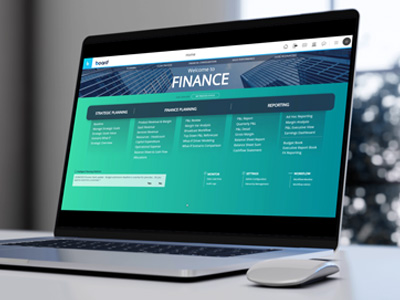
Financial consolidation, financial planning, merchandise planning,
-
supply chain, all connected, all aligned, and it all
-
begins with external signals. Here, executives and analysts
-
alike can explore external market movements by region, by
-
industry, by segment, gaining a forward-looking perspective that
-
sharpens every decision. Whether you are tracking a specific market or
-
monitoring sub-industry dynamics, Board surfaces the indicators that
-
matter most, showing you where the market is heading.
-
These are not generic data feeds. They are curated by a dedicated team of Board
-
economists who select from over eight million indicators those most
-
relevant to your industry and market context.
-
Pricing trends, commodity movements, macroeconomic conditions,
-
all organized to give you a clear outlook for the quarters ahead.
-
Critically, these signals act as leading indicators, showing how long
-
before a market shift reaches your business so you can act early,
-
not reactively.
-
You can benchmark your plan, test products and segments against market trends,
-
and understand how your performance aligns with broader market dynamics.
-
This is what it means to plan with external intelligence at your fingertips,
-
and these signals flow through the entire platform, informing every
-
plan at every level, starting with strategic planning.
-
Here, macroeconomic signals from Board's 4Sight engine combine with
-
baseline growth assumptions and strategic initiatives to create a
-
comprehensive view of your future.
-
Each initiative layers on top of predictive analytics and market assumptions,
-
giving leadership a clear picture of what is possible.
-
You can model upside and downside scenarios, selecting which initiatives to
-
include, mixing and matching options to compare their impact against
-
the baseline. And you can isolate the contribution of each individual
-
initiative so strategic choices are made with clarity and
-
confidence. That strategic direction flows directly into the annual
-
budget. From the homepage, we move into the budgeting and planning
-
workflow, where strategic targets become financial commitments.
-
This is a collaborative process engaging planners at every level, from
-
local teams to regional groups, ensuring alignment across the
-
organization. Workflow capabilities guide each planner through what
-
needs attention: revenue models, cost planning, asset
-
models, so nothing falls through the cracks.
-
And when guidance is needed, the AI agent steps in,
-
recommending the next steps required to complete the 2027 budget
-
tailored to the individual user's context.
-
Planners can follow those recommendations or navigate directly to the model they
-
want to work on. Revenue planning, for example, opens with highly
-
visual interactive dashboards. Every chart is explorable.
-
Drill down, filter, and adjust to find the insight you need.
-
External econometric forecasts from Board Signals and 4Sight sit
-
alongside internal plans so planners can compare historical
-
performance, current plans, and market-driven projections in a
-
single view. All versions converge toward a consensus plan,
-
keeping every stakeholder aligned.
-
For those who need granularity, Board supports planning at the individual product
-
level with both top-down and bottom-up approaches.
-
Numbers can be entered manually, cells can be locked to protect top-down
-
allocations, and the experience remains intuitive throughout.
-
At any point, the AI agent is available, surfacing what needs
-
attention, highlighting priorities, and recommending where to focus
-
next. This is AI working the way it should: as a trusted
-
assistant for every planner.
-
So far, we have seen external signals inform the strategic plan, which
-
sets the targets for financial budgeting.
-
Now, let's follow that thread further from financial plans to operations.
-
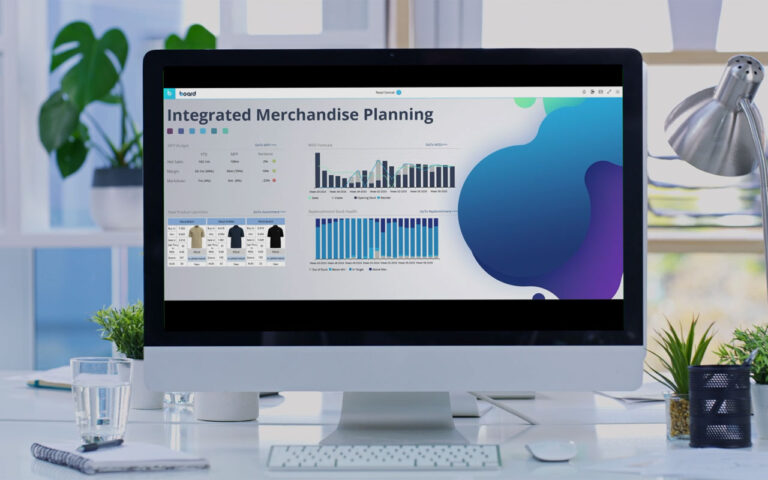
Back on the homepage, we move into merchandise planning, where financial
-
targets become operational reality.
-
In this operational view, I can assess my merchandise plan, how frequently
-
orders must be placed to meet financial targets, as well as assortment decisions:
-
which sizes, which products, and how to manage allocation and replenishment
-
strategies. Board moves seamlessly from a financial plan to a
-
category plan to any granular level of detail, all
-
within the same platform. Planners can compare the financial plan against the
-
operational category plan and benchmark both against the 4Sight
-
predictive model, investigating any detail the moment
-
requires. Drill down to subcategories: T-shirts, yoga
-
pants, individual SKU, and from there, shift to a
-
weekly planning view where operational decisions are made with
-
precision. With the merchandise plan in place, attention turns to
-
supply. How do we fulfill this demand?
-
Different stakeholders, different needs, all addressed within a single connected
-
solution. Planners can assess inventory health, identify
-
gaps between demand and supply, and prioritize accordingly.
-
And once again, the AI agent is here.
-
Pre-built agents help surface capacity constraints, flag critical gaps,
-
and prepare teams for the decisions that matter most.
-
All of this planning—strategic, financial,
-
operational—comes together in one place.
-
With Board's analytics, all charts are interactive, allowing us to filter
-
views, such as comparing current data to budget figures or reviewing
-
multiple data versions. Value creation trees, for instance, let
-
us break down key metrics, such as margin, into components like
-
volume and revenue. Every element is interactive, so we can drill
-
down to specific details, such as sales by manager.
-
We can also track operational metrics, such as reviewing the distribution network
-
for a specific manufacturing site in Europe.
-
Within the European hub, we have access to several distribution
-
centers and can drill down to see all the customers each center serves.
-
We can also leverage geographical objects to understand capacity in different
-
regions. For example, we might see that in Mexico, there is a
-
capacity issue. At this point, we can drill further into different
-
channels to identify where the problems are.
-
Lastly, Board's capabilities extend to financial consolidation as
-
well. Management and statutory consolidation are fully integrated,
-
accessible directly from the home page.
-
Actuals and budgets can be consolidated, data imported from any external
-
system, movement schedules created, and intercompany transactions reviewed,
-
all within the same platform. The intercompany cockpit provides a clear view
-
of all declaring entities and their relationships—Spain, Germany,
-
the Americas—across payables, receivables, local,
-
and transactional currency. Tolerance thresholds, attachments,
-
explanations, and declaration statuses are all visible and
-
manageable in one place. And as usual, AI agents are on
-
hand to flag areas requiring attention, whether at the local entity or
-
group level.
-
Let's reflect on what we've seen. Too often, organizations plan in silos,
-
relying only on internal data. Board Signals changes that by bringing
-
professionally curated external signals directly into the planning
-
process. AI agents support every step—planning,
-
consolidation, and reporting—helping users analyze, model,
-
and act faster. All of this is delivered through a modern,
-
intuitive platform with rich visualizations, built on a powerful
-
multidimensional foundation that connects strategy, finance, operations,
-
and supply chain planning in one truly collaborative experience.