
COMPARE

Board vs. CCH Tagetik

Looking for an alternative to CCH Tagetik?

CCH Tagetik is a Corporate Performance Management solution designed primarily for financial consolidation, regulatory reporting, and compliance-driven processes. While it is well established in the Office of Finance, its architecture is optimized for control and reporting rather than flexible, dynamic planning and analytics.

Board delivers a unified platform that combines enterprise-grade financial consolidation with advanced planning, analytics, and decision support in a single environment. This enables finance teams not only to meet reporting and compliance requirements, but also to plan more dynamically, analyze performance in real time, and drive faster, more informed decisions.

Compare Board and CCH Tagetik in this guide.

Why Board is better for enterprise planning.  

Unified enterprise planning platform

Board combines planning, forecasting, consolidation, and reporting in one unified platform. Unlike Tagetik, which relies on a dual-layer architecture with separate financial and extended planning models, Board operates on a single, unified data model. This eliminates the need for manual synchronization between layers and reduces reliance on external tools for advanced analytics, providing a consistent, real-time view across all processes.

Flexible by design, not limited by architecture

Board’s multi-cube, sparse-native architecture supports unlimited dimensions and real-time modeling without coding. Tagetik’s financial engine is constrained, and advanced use cases rely on its AIH layer – requiring SQL and manual integration between models, increasing complexity and limiting agility.

Business-driven planning without IT dependency

Board empowers business users to build, adapt, and manage planning models without technical expertise. In Tagetik, organizations must choose between rigid pre-built solutions or heavily customized implementations requiring ongoing IT or consultant support, slowing change and increasing cost.

Compare Board and CCH Tagetik.

Enterprise Planning vs Finance-Driven Approach

Tagetik was designed as a finance and controlling solution, with a strong focus on governance, auditability, and reporting consistency. While this makes it effective for structured financial processes, it is less suited for dynamic planning, real-time analysis, and cross-functional decision-making.

Board delivers the same enterprise-grade financial control and consolidation capabilities, while extending the value of the Office of Finance with advanced planning, analytics, and decision support to other planning domains in a single platform.

Board enhances finance with planning and insight, and extends planning to other solutions like Merchandising and Supply Chain planning. Tagetik remains focused on control and reporting.

BoardTagetik
Enterprise Planning

Board is built for enterprise-wide planning across all business functions.

• Supports FP&A, supply chain, workforce, and operations
• Enables cross-functional collaboration
• Designed for business-wide decision-making
Finance-Driven Approach

Tagetik is primarily focused on the Office of Finance.

• Strong in consolidation, tax, and regulatory reporting
• Planning typically introduced as a second phase
• Limited support for complex operational use cases

Unified Architecture vs Dual-Layer Complexity

Tagetik’s architecture separates financial modeling from extended planning capabilities, creating additional complexity.

Board unifies planning. Tagetik splits it across layers.

BoardTagetik
Unified Architecture

Board provides a single, unified architecture.

• One engine for all use cases
• No separation between planning layers
• Real-time data consistency
Dual-Layer Complexity

Tagetik uses a dual-layer approach.

• Financial engine + AIH (Analytical Information Hub)
• Manual synchronization between layers
• Additional complexity for integration and maintenance

Flexible Modeling vs Template-Based Constraints

Planning flexibility is critical for enterprise-scale use cases. Board delivers flexibility by design. Tagetik requires customization effort.

BoardTagetik
Flexible Modeling

Board enables fully flexible, dynamic modeling.

• Unlimited dimensions and hierarchies
• Real-time structural changes
• No coding required
Template-Based Constraints

Tagetik relies on a mix of templates and technical customization.

• Financial model limited in dimensionality
• Advanced use cases require SQL scripting
• Slower iteration and higher effort

Real-Time Performance vs Scaling Limitations

Performance becomes critical as planning complexity grows. Board ensures performance at scale. Tagetik introduces constraints.

BoardTagetik
Real-Time Performance

Board delivers high performance at scale.

• In-memory engine with native sparsity
• Handles large datasets and concurrent users
• Consistent performance across use cases
Scaling Limitations

Tagetik faces planning performance challenges in complex scenarios.

• No native sparsity
• Data redundancy and processing overhead
• Performance can degrade as complexity increases

Modern UX vs Excel-Like Interface

User experience directly impacts adoption and productivity. Board delivers a modern continuous planning experience. Tagetik remains template-driven.

BoardTagetik
Modern UX

Board provides a modern, interactive user experience.

• Rich dashboards and visual analytics
• Real-time exploration and simulation
• High user adoption across business teams
Excel-Like Interface

Tagetik offers a more traditional, finance-oriented interface.

• Excel-like UI and static templates
• Limited native analytics and visualization
• Often requires external BI tools

Dynamic Planning vs Rigid Workflows

Enterprise planning requires flexibility across processes and users. Board adapts to your business. Tagetik enforces predefined processes.

BoardTagetik
Dynamic Planning

Board supports dynamic, business-driven planning.

• Flexible workflows and approvals
• Real-time collaboration
• Adaptable to any business process
Rigid Workflows

Tagetik workflows are more rigid and structured.

• Limited flexibility in workflow customization
• Less adaptable to non-finance use cases
• Reduced agility in real-world scenarios

Advanced Forecasting vs Limited External Intelligence

Modern planning requires integrating internal and external data for better forecasting. Board delivers forward-looking insight. Tagetik remains finance-focused.

BoardTagetik
Advanced Forecasting

Board delivers advanced forecasting with external intelligence.

• Driver-based and scenario modeling
• AI-powered insights and agentic AI capabilities across all planning domains
• Integration of 5M+ external economic data points
Limited External Intelligence

Tagetik focuses primarily on financial forecasting.

• Limited native external data integration
• Less flexibility in scenario modeling
• Narrower view of future performance

Business-Led Planning vs Centralized Control

Planning ownership impacts agility and long-term success. Board empowers the business. Tagetik centralizes control.

BoardTagetik
Business-Led Planning

Board is designed for business-led planning.

• No-code development and updates
• Empowerment across departments
• Faster response to change
Centralized Control

Tagetik is designed for centralized, finance-controlled processes.

• Requires IT or specialist support
• Slower change cycles
• Higher cost of ownership over time

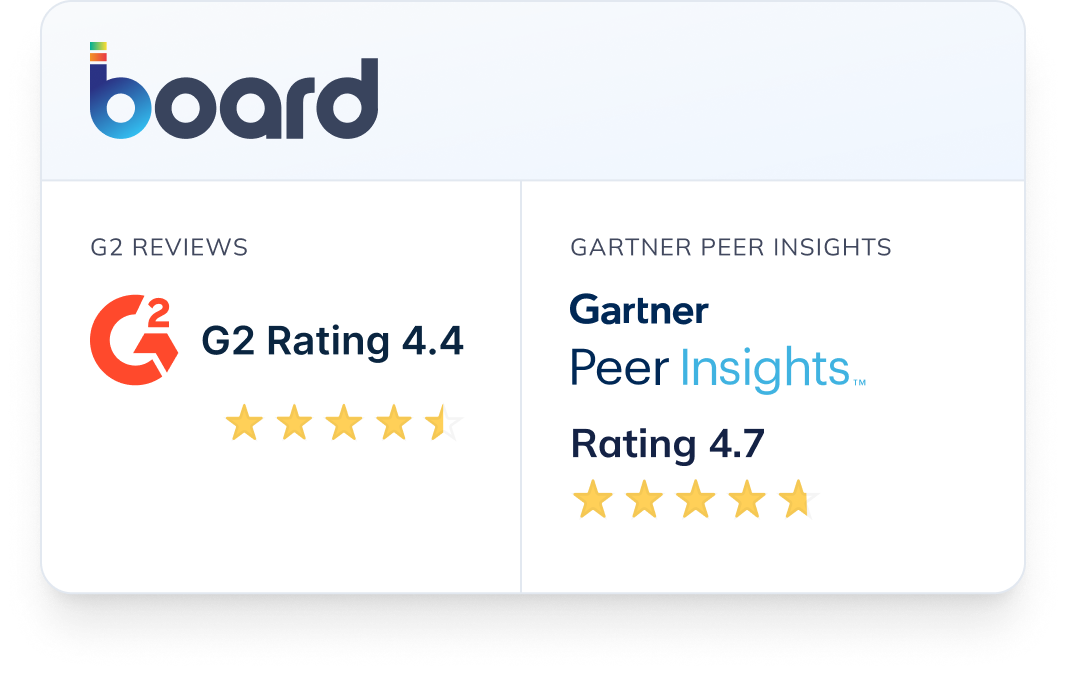
Board is recognized by analysts, peers, and industry experts.

See all recognition

Don’t just take our word for it.

Thousands of leading enterprises plan with Board.

Coca-Cola logo

Automated 90% of financial data input

Coca-Cola implemented Board to automate 90% of financial data input, reducing data transfer time from 24-hours to 15-minutes, enabling driver-based planning across production, supply chain, and logistics for full visibility and consolidation in one-click.

Read the case study
Mitsubishi Electric logo

Accelerated sales decisions from 10-hours to 2-seconds

Mitsubishi Electric chose Board to replace inflexible, manual reporting with a unified, real-time planning platform powering their full sales, forecasting, and planning process across divisions, accelerating sales analysis, reporting, and performance decisions from 10-hours to 2-seconds.

Read the case study
Toyota logo

Standardized PBF across 40 companies

Toyota standardized financial planning, budgeting, and forecasting across 40 companies, replacing disparate spreadsheets with a unified solution supporting different methodologies, including zero-based budgeting and driver-based planning.

Read the case study

FAQs

Board Agents drive collaborative intelligence designed around role-based personas (e.g. FP&A, FCCR, Merchandising, Supply Chain) to collaborate with your planning teams to deliver more confident decisions.

Yes. Board supports a “bring-your-own-model” approach. Even if your data is on-premises, you can seamlessly integrate through REST APIs and built-in connectors such as Azure ML Studio, Databricks, R, and Snowflake. These connect directly into our Microsoft Azure cloud system, ensuring smooth integration and scalability.

Board is designed to meet 100% of enterprise-level scaling requirements. Board’s Enterprise Tier infrastructure meets 99.3% of customer scaling needs with our standard configuration. It manages all scaling requirements seamlessly, without adding any complexity for the customer.

With Flex Grid, Board enables users to analyse, enter, edit, and drill into millions of records in real-time. Its high-performance grid ensures smooth interaction with massive datasets and no front-end lag.