

COMPARE

Board vs. Oracle EPM

Looking for an alternative to Oracle EPM?

Oracle EPM is built as a suite of specialized modules designed for finance-led processes. While powerful in structured environments, this architecture introduces complexity, integration overhead, and heavy IT dependency.

Board delivers a unified, business-driven platform that connects planning, analytics, and consolidation enabling faster decisions without technical friction.

Compare Board and Oracle EPM in this guide.

Why Board is better for enterprise planning.  

Unified planning, analytics, and consolidation

Board combines planning, forecasting, financial consolidation, and reporting in a single, unified platform. Unlike Oracle EPM, which relies on multiple specialized modules (Planning, FCCS, Reporting), Board eliminates the need for data replication, integration layers, and cross-system reconciliation ensuring one source of truth across the enterprise.

Business-owned platform, not IT-dependent

Board empowers business users to manage and evolve planning models without coding or technical expertise. In contrast, Oracle EPM environments rely heavily on scripting, technical configuration, and specialized skills, making even routine changes dependent on IT or external consultants, increasing cost and slowing decision-making.

Dynamic planning at enterprise scale

Board enables real-time, flexible planning with drill-anywhere navigation, on-the-fly analysis, and seamless integration of financial and operational data. Oracle EPM’s form-based approach limits users to predefined structures and workflows, making it difficult to adapt quickly or maintain agility as business complexity grows.

Compare Board and Oracle EPM.

Unified Platform vs Modular Architecture

Oracle EPM is composed of multiple specialized modules (Planning, FCCS, Reconciliation, Reporting), each with its own data model and logic. While this allows functional depth, it creates fragmentation across processes.

Board unifies planning and data. Oracle fragments them across modules.

BoardOracle EPM
Unified Platform

Board provides a single, unified platform for planning, analytics, and financial consolidation.

• One data model across all use cases
• Seamless integration between financial and operational planning
• No duplication of data or logic
Modular Architecture

Oracle EPM relies on a modular architecture where each function operates independently.

• Separate modules with distinct data structures
• Data replication and synchronization required
• Integration layers needed to connect processes

Scalable Architecture vs Integration Overhead

As business complexity increases, Oracle’s architecture requires growing levels of integration and data management to maintain consistency across modules.

Board simplifies scaling. Oracle adds integration overhead.

BoardOracle EPM
Scalable Architecture

Board scales naturally with business complexity through a unified architecture.

• No need for data replication or synchronization
• Consistent performance across all planning domains
• Simplified data management at scale
Integration Overhead

Oracle EPM introduces structural overhead as complexity grows.

• Increasing reliance on integration and MDM layers
• Data synchronization across applications
• Higher latency and operational complexity

Business Ownership vs IT Dependency

Oracle EPM environments depend heavily on technical configuration, scripting, and specialized expertise to manage changes.

Board empowers business users. Oracle depends on IT and consultants.

BoardOracle EPM
Business Ownership

Board is designed for business self-reliance, enabling teams to manage and evolve planning models independently.

• No-code configuration
• Business users control models and processes
• Faster response to changing business needs
IT Dependency

Oracle EPM requires ongoing involvement from IT teams and consultants.

• Scripting and technical configuration required
• Dependence on specialized expertise
• Longer change cycles and higher costs

Agile Change vs Structural Complexity

In Oracle EPM, even small business changes can trigger broader structural impacts across models and calculations.

With Board, change is simple. With Oracle, change becomes a project.

BoardOracle EPM
Agile Change

Board enables fast, predictable changes without structural side effects.

• Changes applied directly at the model level
• No impact on storage or architecture
• Rapid adaptation to evolving requirements
Structural Complexity

Oracle EPM changes often require complex technical adjustments.

• Dimension updates trigger recalculation scope changes
• Structural dependencies across cubes
• Increasing complexity as models evolve

Dynamic Planning vs Static Forms

Oracle EPM enforces a form-based planning experience with predefined structures and limited flexibility for users.

Board enables dynamic decision-making. Oracle restricts users to static workflows.

BoardOracle EPM
Dynamic Planning

Board enables dynamic, interactive planning that adapts to user needs in real time.

• Drill-anywhere navigation
• On-the-fly pivoting and analysis
• Flexible layouts and perspectives
Static Forms

Oracle EPM relies on static, predefined planning forms.

• Fixed dimensional context
• Limited ability to pivot or reshape views
• Navigation constrained to predefined paths

Unified Operational & Financial Planning vs Structural Limits

Modern planning requires combining operational and financial data at scale. Oracle’s architecture struggles to maintain this balance as complexity increases.

Board enables true enterprise planning. Oracle forces trade-offs between scale and complexity.

BoardOracle EPM
Unified Operational & Financial Planning

Board supports unified planning across financial and operational domains.

• Handles high-dimensional, sparse data natively
• Maintains detail and performance at scale
• Supports enterprise-wide use cases in one model
Structural Limits

Oracle EPM faces limitations when combining operational and financial planning.

• Block-based storage and pre-aggregation constraints
• Requires simplification or separation of models
• Difficult to maintain a unified planning environment at scale

Predictable Evolution vs Growing Complexity

As Oracle environments expand, they require increasing effort to maintain performance, consistency, and alignment across modules.

Board scales with confidence. Oracle increases complexity over time.

BoardOracle EPM
Predictable Evolution

Board ensures long-term scalability with a stable and unified architecture.

• Consistent performance over time
• No architectural rework as complexity grows
• Lower long-term maintenance effort
Growing Complexity

Oracle EPM environments become more complex to manage as they evolve.

• Increasing dependency on integration layers
• Growing maintenance and support requirements
• Higher long-term cost of ownership

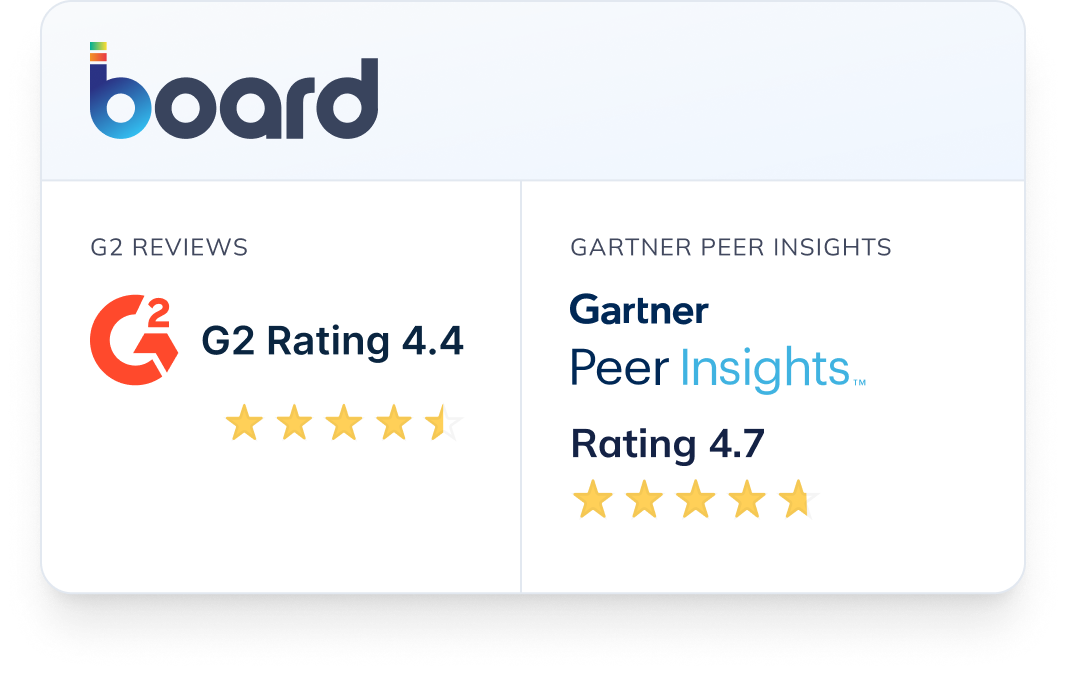
Board is recognized by analysts, peers, and industry experts.

See all recognition

Don’t just take our word for it.

Thousands of leading enterprises plan with Board.

Coca-Cola logo

Automated 90% of financial data input

Coca-Cola implemented Board to automate 90% of financial data input, reducing data transfer time from 24-hours to 15-minutes, enabling driver-based planning across production, supply chain, and logistics for full visibility and consolidation in one-click.

Read the case study
Mitsubishi Electric logo

Accelerated sales decisions from 10-hours to 2-seconds

Mitsubishi Electric chose Board to replace inflexible, manual reporting with a unified, real-time planning platform powering their full sales, forecasting, and planning process across divisions, accelerating sales analysis, reporting, and performance decisions from 10-hours to 2-seconds.

Read the case study
Toyota logo

Standardized PBF across 40 companies

Toyota standardized financial planning, budgeting, and forecasting across 40 companies, replacing disparate spreadsheets with a unified solution supporting different methodologies, including zero-based budgeting and driver-based planning.

Read the case study

FAQs

Board Agents drive collaborative intelligence designed around role-based personas (e.g. FP&A, FCCR, Merchandising, Supply Chain) to collaborate with your planning teams to deliver more confident decisions.

Yes. Board supports a “bring-your-own-model” approach. Even if your data is on-premises, you can seamlessly integrate through REST APIs and built-in connectors such as Azure ML Studio, Databricks, R, and Snowflake. These connect directly into our Microsoft Azure cloud system, ensuring smooth integration and scalability.

Board is designed to meet 100% of enterprise-level scaling requirements. Board’s Enterprise Tier infrastructure meets 99.3% of customer scaling needs with our standard configuration. It manages all scaling requirements seamlessly, without adding any complexity for the customer.

With Flex Grid, Board enables users to analyse, enter, edit, and drill into millions of records in real-time. Its high-performance grid ensures smooth interaction with massive datasets and no front-end lag.